
Main Courses
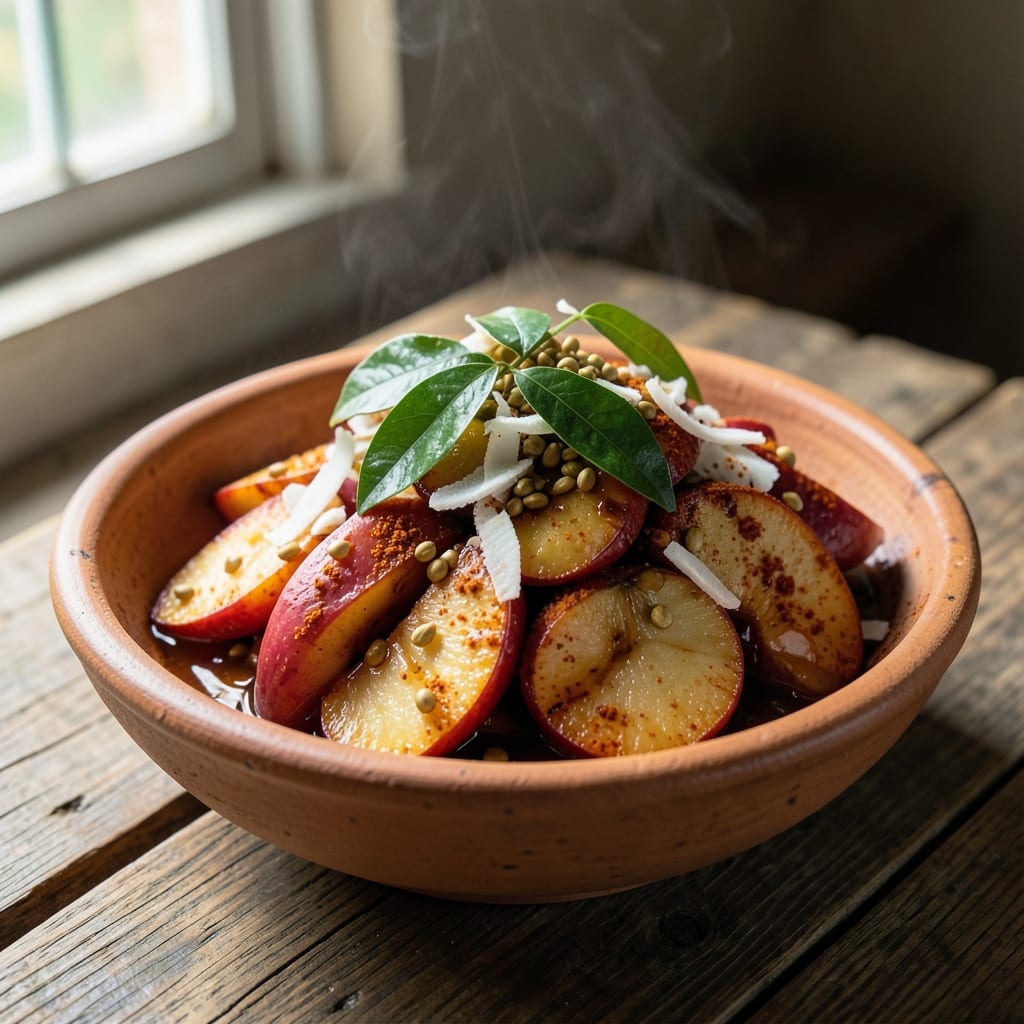
This apple achar recipe in Malayalam brings the bold, tangy-spiced flavors of Kerala right to your kitchen table. 🌟 The secret lies in the perfect balance of mustard seeds, curry leaves, and coconut, which transform ordinary apples into a vibrant, crunchy condiment that pairs beautifully with rice or dosa. I developed this recipe after years of experimenting with traditional achar methods, ensuring every bite delivers that signature sweet-sour crunch.
The process begins with thinly sliced apples soaked in saltwater to draw out excess moisture, followed by a fragrant spice tempering that awakens the flavors. Coconut adds a subtle sweetness that rounds out the sharpness of the spices, while turmeric and red chili deliver that signature Kerala kick. What makes this recipe special is how the flavors deepen over time—each day in the jar brings more complexity.
By the time you're done, you'll have a jar of tangy-spiced pickled apples that's crisp, aromatic, and impossible to resist. The apples stay crunchy while absorbing the bold flavors of the spice blend, creating a texture that's both satisfying and refreshing. This isn't just a side dish—it's a flavor experience that elevates any meal.
Perfect for snacking, pairing with rice, or gifting in small jars, this achar keeps beautifully for weeks. The best part? You can adjust the spice level to suit your taste while maintaining that authentic Kerala touch. Let's get started on this flavor-packed recipe!
Ingredients for apple achar recipe in malayalam
These vibrant ingredients transform simple apples into Kerala's signature tangy-spiced achar with coconut richness.
| Ingredient | Amount | Notes |
|---|---|---|
| Green Apples 🍎 | 2 lb | Firm, tart variety like Granny Smith |
| Curry Leaves 🌿 | ½ cup | Fresh, whole leaves preferred |
| Mustard Seeds 🌶️ | 2 tbsp | Brown or yellow variety |
| Coconut Shredded 🥥 | ½ cup | Sweetened or unsweetened |
| Turmeric Powder 🧡 | 1 tsp | Freshly ground preferred |
| Red Chili Powder 🌶️ | 1 ½ tbsp | Adjust for heat preference |
| Salt 🧂 | ½ cup | Fine sea salt preferred |
| Fresh Ginger 🌿 | 2 tbsp | Grated, freshly grated |
| Asafoetida (Hing) 🌶️ | ¼ tsp | A pinch enhances aroma |
| Fenugreek Seeds 🌿 | 1 tsp | Lightly toasted first |
| Sugar 🍚 | ¼ cup | White or jaggery preferred |
| Lemon Juice 🍋 | ¼ cup | Freshly squeezed |
| Water 💧 | 2 cups | Filtered or boiled |
The star is Granny Smith apples—their tartness cuts through the coconut sweetness perfectly. Buy organic if possible to avoid wax coatings that ruin the crisp texture. For curry leaves, Indian grocery stores have the freshest—look for vibrant green, not wilted. Mustard seeds should be whole and yellow-brown, not pre-ground. Coconut? Sweetened shreds work best here, but unsweetened adds a cleaner taste. Toast your fenugreek and mustard seeds in a dry pan for 30 seconds before adding to water—this wakes up their flavors. Asafoetida is non-negotiable for that authentic umami punch, but a tiny pinch is all you need.
No curry leaves? Dried curry powder at half the amount works in a pinch, though fresh is ideal. Short on mustard seeds? Cumin seeds at the same quantity gives a different but delicious profile. Using jaggery instead of sugar? Reduce to 0.2 cup—it's sweeter. The ginger should be freshly grated (pre-ground loses potency fast). For extra heat, swap red chili powder for Kashmiri chili powder—it's milder but adds gorgeous color. Lemon juice? Freshly squeezed is a must—bottled won't give the same bright tang. And if you're feeling adventurous, add 1 tsp black salt (kala namak) for that signature sulfurous note.
This achar gets better with age—wait at least 3 days before eating for full flavor development. Store in sterilized glass jars with tight lids in a cool, dark place. Keeps for up to 3 months in the fridge, though I usually finish mine in weeks. For gifting, use small decorative jars—they make perfect presents. The apples stay delightfully crunchy if you pack them tightly in the jar, leaving just enough liquid to coat them. Pro tip: Layer the spices at the bottom before adding apples for even flavor distribution.
Why You'll Love This Recipe
- No-Chop Needed: I swear by this trick—just quarter the apples, no peeling or slicing fuss. The curry leaves and mustard seeds do all the work in the pan while I sip my tea.
- Tangy-Sweet Magic: That first bite? Crisp green apples caramelized just enough, with coconut lending a creamy contrast and turmeric adding a warm glow. Honestly, it’s the kind of flavor that makes you reach for seconds without thinking.
- Party-Ready Side: Serve it with dosas, idlis, or even plain rice—it’s that versatile. My in-laws always ask for extra when I bring it to gatherings, and it’s the one dish that everyone clears from the plate.
- Lasts a Week: Make a big batch on Sundays, and you’ve got a pantry staple for the whole week. The apples get even better as the achar sits, and the coconut keeps it rich without going stale. (Yes, even on a Tuesday night.)
Step-by-step instructions for apple achar with Malayalam spice magic
This tangy-spiced treasure transforms tart green apples into a vibrant, crunchy condiment that sings with coconut, chili, and aromatic spices.
🍳 Step 1: Prepare the Spice Base and Cook the Mustard
In a heavy-bottomed pot, heat the 2 tbsp mustard seeds over medium-low heat until they begin to pop—this should take about 1-2 minutes. The moment they start spluttering, immediately add the 0.5 cup curry leaves and 1 tsp fenugreek seeds (pre-toasted for 30 seconds in a dry pan until fragrant). Stir constantly for 30 seconds until the curry leaves darken slightly and release their citrusy aroma.
Here's where it gets good: add the 2 tbsp fresh ginger and 0.25 tsp asafoetida (hing). The hing will make your kitchen smell like Kerala markets—trust me, that's a good thing. Cook these aromatics for 1 minute until the ginger loses its raw bite and the hing dissolves completely. This aromatic base forms the soul of your achar, so don't rush this step.
🍳 Step 2: Build the Spice Mixture with Turmeric and Chili
Lower the heat to low and add the 1 tsp turmeric powder and 1.5 tbsp red chili powder. Stir vigorously for 1 minute to toast the spices until you smell their earthy, slightly smoky aroma. This step develops the complex flavors that make Malayalam achars so special—don't skip it.
Now add the 0.5 cup salt and 0.25 cup sugar, mixing well to distribute evenly. The salt will draw out moisture from the apples later, while the sugar balances the acidity. Add the 2 cups water and bring the mixture to a gentle simmer for 5 minutes, stirring occasionally. You're creating a flavorful brine that will infuse the apples.
🍳 Step 3: Cook the Apples Until Tender-Crisp
Peel and core the 2 lb green apples (leave the skin on for texture), then cut them into ½-inch thick slices. Add them to the simmering spice mixture and cook for 10-12 minutes over medium heat, stirring gently every 2-3 minutes. You want the apples to soften slightly but still retain their bite—think "al dente" for fruit.
Watch for the apples to turn translucent at the edges while maintaining their shape. If they're cooking too quickly, reduce the heat to low. The perfect texture is the key to great achar—too soft equals mush, too firm equals disappointment. Here's the thing: the apples will continue cooking as they cool, so pull them out when they're just barely tender.
🥘 Step 4: Finish with Coconut and Acid
Remove the pot from heat and stir in the 0.5 cup shredded coconut and 0.25 cup lemon juice. The coconut adds a delightful sweetness that contrasts beautifully with the tangy spices, while the lemon juice brightens everything up. Let the mixture cool to room temperature—this allows all the flavors to meld together perfectly.
For best results, transfer the achar to a clean, sterilized glass jar and refrigerate for at least 4 hours (overnight is ideal). The flavors will deepen and the textures will set properly. When ready to serve, give it a good stir—the coconut will sink to the bottom, creating those delicious pockets of flavor in every bite.
⏰ Step 5: Serve with Perfect Pairings
Apple achar keeps well in the refrigerator for up to 2 weeks, but it tastes best when served fresh. The vibrant green color, crunchy texture, and complex spice profile make it an incredible accompaniment to dosas, idlis, or even as a topping for yogurt. For extra drama, garnish with a sprinkle of extra curry leaves just before serving.
This achar delivers that perfect balance of sweet, sour, spicy, and umami that defines Malayalam cuisine. The coconut twist adds a unique dimension that makes it stand out from traditional versions. Trust me, your taste buds will thank you for every tangy, crunchy bite!
Pro Tips For Making Apple Achar Recipe In Malayalam
- Slice Thin, Even Strips: Green apples turn mushy fast, so cut them into ¼-inch thick slices—not too thick, not too thin. I learned this the hard way: thick slices stay crunchy longer, but thin ones caramelize better. Use a sharp knife and cut parallel to the core for consistency.
- Bloom Spices in Oil: Heat mustard seeds in oil until they pop before adding curry leaves—this unlocks their flavor. Skip this, and your achar will taste flat. A medium flame works; high heat burns them before they sizzle.
- Salt in Layers: Add half the salt when slicing the apples, the rest after cooking. This balances sweetness and prevents the achar from becoming watery. Trust me, your taste buds will notice the difference.
- Grated Coconut Trick: Use freshly grated coconut—pre-shredded dries out fast and tastes stale. If you’re short on time, soak dried coconut flakes in warm water for 10 minutes before grating. It makes all the difference in texture.
Common mistakes when making your apple achar recipe in malayalam
Over-Soaking Apples
I learned the hard way that leaving apples in saltwater too long turns them mushy instead of delightfully crunchy. The ideal soak time is 15-20 minutes—just enough to draw out excess moisture without breaking down the texture. Set a timer! I once let mine soak for 45 minutes while making tea, and the result was a sad, limp pile of apple slices. 🍎
Skipping the Spice Toast
Don't rush the spice toasting step—this is where the magic happens! I've seen people add turmeric and chili powder directly to the water, but toasting them first deepens their flavors dramatically. Toast your spices for 1-2 minutes until you smell that nutty, earthy aroma. This step builds layers of complexity that make the difference between good achar and extraordinary achar.
Uneven Spice Distribution
Layering the spices at the bottom of the jar before adding apples ensures every slice gets coated in flavor. I once dumped everything in together and ended up with some bland apple pieces. For perfect flavor in every bite, create a spice "bed" first, then arrange apple slices on top. This also prevents the coconut from floating to the very top where it's hard to reach.
Using the Wrong Apple Variety
Granny Smith apples are non-negotiable for this recipe—their tartness balances the coconut sweetness perfectly. I tried this with Fuji apples once (thinking they'd be sweeter), and the result was too mild. The apples should be firm enough to hold their shape during cooking but tart enough to stand up to the spices. If you can only find sweet apples, add 1 extra tbsp lemon juice to compensate.
Not Letting It Rest
Patience is key with achar—the flavors develop as it sits! I've been guilty of eating it fresh out of the pot, only to find the spices and sweetness weren't fully married. Always let your achar rest in the refrigerator for at least 4 hours (overnight is ideal). This resting period allows all the components to meld together beautifully, creating that perfect balance of sweet, sour, spicy, and umami that defines Malayalam cuisine.
Ignoring the Coconut Layer
The coconut isn't just for flavor—it creates texture contrast that makes this achar special. I once made a batch without coconut (thinking it was optional) and missed that delightful crunchy-sweet element. Stir the coconut in at the end so it sinks to the bottom, creating pockets of flavor in every bite. For extra richness, use sweetened shredded coconut—it adds just the right amount of sweetness to balance the tangy spices.
Nutrition facts
Frequently asked questions about Malayalam apple achar
Can I use red apples instead of green apples for this recipe?
Red apples like Gala or Fuji will work, but they're sweeter and less tart than Granny Smith. For best results, use 1 extra tbsp lemon juice to balance the sweetness and maintain that signature tangy flavor. The texture will be slightly softer, so cook them for just 8-10 minutes instead of 12 to preserve crunch.
How do I adjust the spice level for kids or sensitive stomachs?
Reduce the red chili powder to 1 tsp and replace the remaining 0.5 tbsp with mild paprika. For extra safety, remove the seeds from the chili powder before adding. The coconut and turmeric will still provide that warm, comforting flavor without the heat. Always taste as you go—you can add more chili later if needed.
What's the best way to store homemade apple achar?
Transfer to a clean, sterilized glass jar with a tight lid and store in the refrigerator. This achar keeps for 2-3 weeks while maintaining its vibrant color and crunch. For longer storage (up to 3 months), freeze in airtight containers—just thaw overnight in the fridge before serving. The flavors actually improve with time, so it's perfect for making ahead.
Can I make this achar without coconut?
Yes, but you'll miss that delightful texture contrast. Replace the coconut with 0.5 cup raisins for sweetness or 0.25 cup dried cranberries for tartness. The raisins will soften and create a jammy texture that pairs beautifully with the spicy apples. If you prefer no fruit, increase the sugar to 0.3 cup to balance the acidity.
What are the best ways to serve Malayalam apple achar?
This achar shines as a side with steamed rice, dosa, or idli, but it's also fantastic with grilled meats, cheese boards, or even as a topping for yogurt. For extra drama, sprinkle with toasted sesame seeds before serving. The crunchy-spicy contrast makes it perfect for both breakfast and dinner pairings. Try it with Kerala-style parotta for a true regional experience!