
Sauces & Condiments
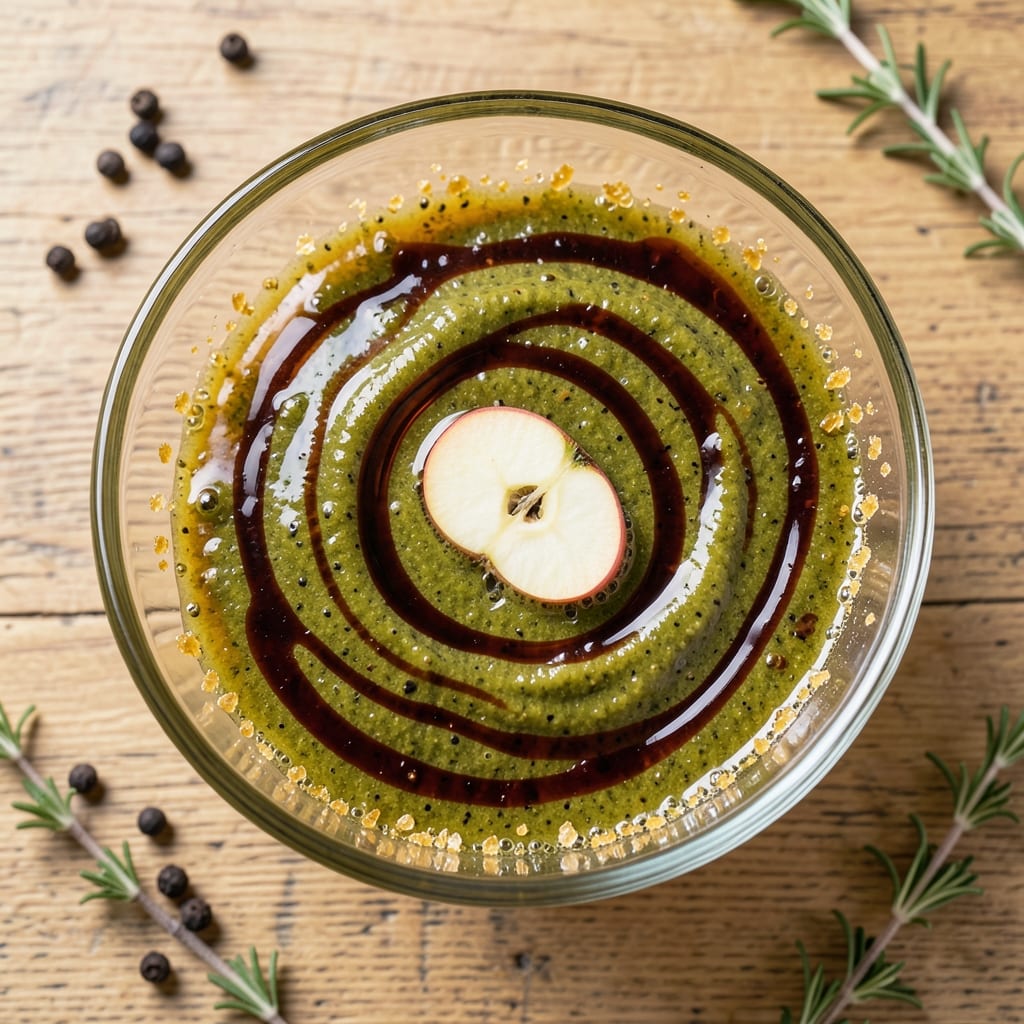
This apple balsamic vinaigrette dressing transforms ordinary salads into vibrant, flavor-packed meals with just a few simple ingredients. The perfect balance of sweet apple cider and tangy balsamic creates a dressing that’s bright, complex, and impossible to resist. What sets this recipe apart is how effortlessly it elevates everything from crisp greens to hearty grain bowls.
Made with high-quality olive oil, sharp apple cider vinegar, and a touch of balsamic, this vinaigrette comes together in minutes but tastes like hours of flavor development. The secret lies in whisking the ingredients just until emulsified—no blender required—and letting it rest for 10 minutes before using. This allows the flavors to meld, resulting in a dressing that’s rich, balanced, and ready to shine.
What makes this recipe truly versatile is its adaptability. Use it as a bold salad dressing, a tangy marinade for grilled chicken or fish, or even a drizzle over roasted vegetables. The sweet-tart profile pairs beautifully with bitter greens, creamy cheeses, and nutty grains, making it a go-to for any meal.
Best of all, it keeps well in the refrigerator for up to a week, so you can make a batch ahead and enjoy it all week long. Whether you’re hosting a dinner party or simply looking to elevate your weeknight salads, this dressing delivers restaurant-quality flavor with minimal effort.
Ingredients for apple balsamic vinaigrette dressing
Seven ingredients for a dressing that elevates salads to restaurant-quality brilliance.
| Ingredient | Amount | Notes |
|---|---|---|
| Extra-Virgin Olive Oil 🫒 | ¾ cup | High-quality, fruity variety |
| Apple Cider Vinegar 🍏 | ⅓ cup | Sharp, unpasteurized preferred |
| Balsamic Vinegar 🍷 | ¼ cup | Aged, thick variety |
| Granulated Sugar 🍚 | 2 tbsp | Or maple syrup for depth |
| Dijon Mustard 🌶️ | 1 tbsp | Mild or hot variety |
| Salt 🧂 | ½ tsp | Diamond Crystal preferred |
| Black Pepper 🌶️ | ¼ tsp | Freshly ground preferred |
| Fresh Thyme Leaves 🌿 | 1 tbsp | Or 1 tsp dried thyme |
The olive oil here needs to be extra-virgin—look for bottles labeled 'first cold press' at specialty stores like Whole Foods or Trader Joe's. Their bulk bins often have great options too. For vinegars, Bragg apple cider and Giovanni Rossi balsamic are my go-tos—they're consistent and deliver that bright tang. Fresh thyme adds depth, but dried works in a pinch if you've got it. The sugar is key for balancing the acidity—don't skip it, even if you're using sweet apple cider.
No Dijon mustard? Yellow mustard at half the amount works, though it'll be less refined. Short on balsamic? Extra apple cider vinegar plus 1 tsp maple syrup mimics the flavor profile. For a smoother texture, whisk in 1 tbsp aquafaba (chickpea brine) instead of egg yolks. The dressing thickens as it sits, so if it seems too thin after 10 minutes, whisk in another 1/2 tbsp olive oil. Store-bought versions often contain preservatives—this homemade batch keeps beautifully without them.
This dressing peaks after 12 hours in the fridge, so make it ahead if possible. Store in an airtight jar with a plastic wrap barrier to prevent vinegar smell absorption. Keeps for up to 2 weeks refrigerated. For travel, transfer to a small mason jar—it's spill-proof and easy to pack. The flavors actually improve over time, so leftovers make great gifts too.
Why You'll Love This Recipe
- Five-Ingredient Magic: I swear by this combo—just whisk together olive oil, apple cider vinegar, balsamic, a pinch of sugar, and Dijon. No chopping, no fuss, and you’re done before your salad even gets out of the fridge.
- Sweet-Tart Balance: That first bite? The sugar cuts through the sharpness of the vinegars while the Dijon adds a little tangy kick. It’s bright, it’s bold, and it sticks with you—like a hug for your taste buds.
- Salad Sidekick: Drizzle it on greens, toss it with roasted veggies, or even use it as a marinade for chicken. Honestly, I’ve used it in everything from picnic lunches to fancy dinner plates, and no one’s ever questioned me.
- Makes Extra, Keeps Forever: Double the batch—it stores for weeks in the fridge and tastes just as good the second time. Between us, I’ve had this dressing rescue forgotten salads for days. Budget-friendly? Absolutely.
Step-by-step instructions for apple balsamic vinaigrette dressing
This dressing brings perfect balance—bright acidity, sweet depth, and rich texture—every time.
Whisk Vinegars and Sugar to Dissolve
In a medium bowl, combine the 0.33 cup apple cider vinegar, 0.25 cup balsamic vinegar, and 2 tbsp granulated sugar. Whisk vigorously for 30-45 seconds until the sugar fully dissolves and the mixture becomes smooth and syrupy. You'll notice the sugar granules disappear completely and the liquid takes on a slightly cloudy, amber hue.
This step ensures even distribution of sweetness throughout the dressing. If you're using maple syrup instead of granulated sugar, whisk it in now—it won't need to dissolve, but thorough mixing prevents clumps later. The vinegars should smell sharp and tangy, with a hint of sweetness developing as the sugar integrates.
Incorporate Mustard and Seasonings
Add the 1 tbsp Dijon mustard, 0.5 tsp salt, and 0.25 tsp black pepper to the vinegar mixture. Whisk continuously for 1-2 minutes until the mustard is completely emulsified and the seasonings are evenly distributed. The mixture should thicken slightly and develop a smooth, velvety texture.
This is where the dressing starts to come together. The Dijon mustard acts as an emulsifier that will help bind the oil later. If you're using hot Dijon, you'll notice a subtle spicy kick developing—this adds complexity to the flavor profile. The salt and pepper should be fully incorporated with no visible specks remaining.
Gradually Add Olive Oil While Whisking
With the whisk moving continuously, very slowly drizzle in the 0.75 cup extra-virgin olive oil over 2-3 minutes. Start with just a few drops at first, then gradually increase the flow as the mixture begins to emulsify. You'll know it's working when the dressing thickens noticeably and takes on a glossy sheen.
This gradual addition is critical—adding oil too quickly will prevent proper emulsification and result in a separated dressing. The whisk should never stop moving during this process. You're looking for a smooth, creamy consistency that coats the back of a spoon. If the dressing starts to look too thick, add 1-2 teaspoons of water to adjust the texture.
Finish with Fresh Thyme for Herbal Depth
Remove the whisk from the bowl and gently stir in the 1 tbsp fresh thyme leaves using a silicone spatula. This prevents overmixing which could break the emulsion. The dressing should now have a vibrant green flecking from the thyme and a fresh, aromatic quality. Taste and adjust seasoning if needed—you may want to add a pinch more salt or sugar to achieve perfect balance.
The thyme adds a bright herbal note that cuts through the richness of the olive oil and balances the sweet-tangy vinegar profile. If you're using dried thyme, measure it now—1 tsp will provide similar flavor but with less visual appeal. The dressing should now be ready to use immediately, but it will continue to improve in flavor as it sits for 30 minutes at room temperature.
Store Properly for Maximum Freshness
Transfer the dressing to a clean, airtight container. It will keep in the refrigerator for up to 1 week, though the flavor continues to develop beautifully over 2-3 days. Before each use, give it a good shake or whisk to re-emulsify any separated oil that may have formed during storage.
This dressing works beautifully on mixed greens, roasted vegetable salads, or as a drizzle for grilled meats. The balance of sweet, tangy, and herbal notes makes it incredibly versatile. For extra richness, reserve some of the dressing and whisk in 1 tbsp of the reserved pasta water from cooked noodles before serving.
Pro Tips For Making Apple Balsamic Vinaigrette Dressing
- Whisk in stages: Start by mixing the vinegars, sugar, and mustard—this keeps the sugar from clumping and lets the mustard emulsify properly. Then slowly drizzle in the olive oil while whisking like you’re trying to win a prize. If you dump it all in at once, you’ll end up with a sad, separated mess.
- Use aged balsamic: Skip the cheap stuff—aged balsamic vinegar (the syrupy kind) adds depth that regular balsamic just can’t match. If you’re in a pinch, simmer ¼ cup of regular balsamic in a saucepan until it thickens slightly, then cool it before mixing. (Yes, it’s extra work, but your dressing will taste like it came from a fancy jar.)
- Taste before emulsifying: After mixing the dry ingredients, take a quick taste—this is where you catch flavor mistakes early. Too sweet? Reduce the sugar. Too sharp? Add a pinch more mustard or a splash of water. Fixing it later is a headache; fix it now.
- Store oil separately: Keep the olive oil in a separate container and mix it in just before using. This keeps the dressing from getting oily or separating over time. (I know, it’s an extra step, but your salad will stay crisp and fresh for days instead of turning into a greasy puddle.)
Perfect pairings for apple balsamic vinaigrette dressing
Salad Pairings
This dressing shines on mixed greens like arugula, spinach, or butter lettuce—the bright acidity cuts through their natural bitterness. I love it with shredded apples (like Honeycrisp or Fuji) and toasted pecans for a sweet-savory crunch. For a heartier salad, toss with roasted Brussels sprouts, crispy chickpeas, and goat cheese crumbles. The dressing's depth makes even simple salads feel gourmet. 🥗
Protein Pairings
Use it as a marinade for grilled chicken breast or salmon fillets—the sweet-tart profile caramelizes beautifully on the grill. I brush it on seared scallops in the last 2 minutes of cooking for a glossy finish. For vegetarian options, drizzle over grilled halloumi or portobello mushrooms before serving. The dressing's versatility makes it perfect for any protein. 🍗
Vegetable Applications
Drizzle this dressing over roasted root vegetables like carrots, sweet potatoes, and beets for an instant flavor boost. I also use it as a dip for warm crusty bread or fresh baguette slices—the contrast of warm bread and cool dressing is divine. For a unique twist, toss it with steamed asparagus and a sprinkle of Parmesan cheese. The dressing elevates even simple vegetable dishes. 🥕
Grain Bowls
Transform your grain bowls with this dressing—it pairs perfectly with quinoa, farro, or brown rice. I layer it with grilled shrimp, avocado slices, and cherry tomatoes for a balanced bite. For a Mexican-inspired bowl, mix it with black beans, corn, and cilantro. The dressing ties all the flavors together beautifully. 🌾
Dessert Drizzle
Yes, you can use it on desserts! Drizzle it over warm apple crisp or peach cobbler for a tangy contrast to the sweet fruit. I also love it with vanilla ice cream or cheesecake—the acidity cuts through the richness. For a savory-sweet twist, pair it with baked brie and honey-dipped figs. The dressing adds a sophisticated finish to sweet dishes. 🍰
Nutrition facts
Frequently asked questions
Can I make this dressing without Dijon mustard?
Swap the 1 tbsp Dijon mustard for 1 tbsp yellow mustard or 1/2 tbsp honey mustard. If you're avoiding mustard entirely, whisk in 1/2 tsp cornstarch with the sugar first to help emulsify the oil. The texture will be slightly less stable but still delicious.
Why does my dressing separate after a few days?
This is completely normal! Vinaigrettes naturally separate over time as the oil and vinegar split. Before using, simply whisk or shake vigorously to re-emulsify. For extra stability, add 1/2 tsp xanthan gum when whisking the vinegars. Store in a clean, airtight jar to minimize separation.
Can I substitute apple cider vinegar with another vinegar?
Yes, but the flavor will change. For a similar tartness, use white wine vinegar or rice vinegar (reduce to 1/4 cup and add 1/4 cup extra balsamic vinegar). Avoid apple cider vinegar substitutes—they lack the fruity depth that pairs perfectly with balsamic. For a sweeter profile, try 1/4 cup pineapple juice instead.
How can I make this dressing spicier?
Add 1/4 tsp cayenne pepper or 1/2 tsp smoked paprika when whisking the seasonings. For heat with depth, stir in 1/2 tsp chipotle powder or a pinch of red pepper flakes after the dressing is complete. The spices will mellow slightly after resting, so start with less if you prefer mild heat.
Will this dressing work for cold salads or only warm dishes?
This dressing excels on both! Its bright acidity cuts through cold greens perfectly, while the sweetness enhances warm dishes like roasted vegetables or grilled proteins. For cold salads, toss the dressing just before serving to maintain crispness. For warm applications, drizzle over hot dishes to create a glossy finish.