
Desserts
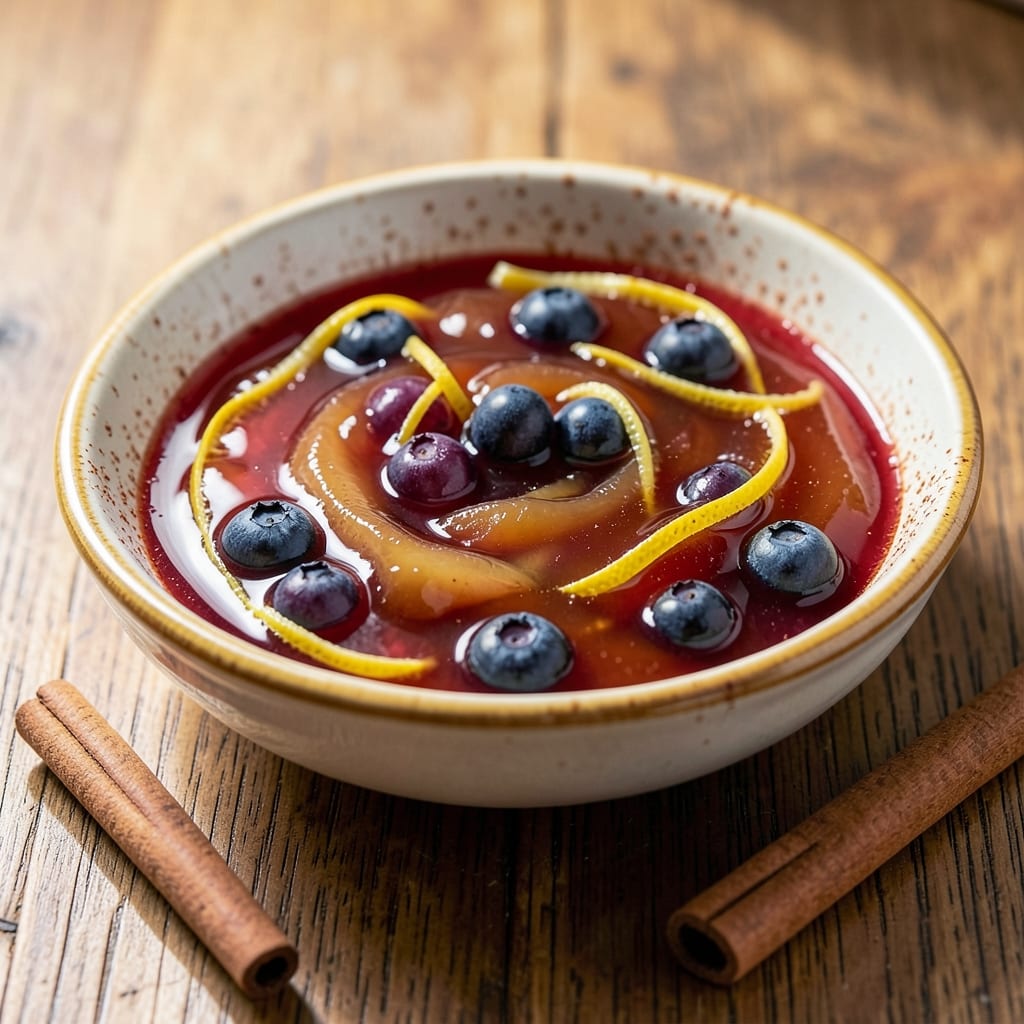
This apple blueberry jelly recipe transforms two seasonal fruits into a vibrant, naturally set spread without any pectin. The balance of tart apples and sweet blueberries creates a complex flavor that works perfectly on toast, as a cocktail glaze, or drizzled over yogurt. I developed this method after years of testing fruit combinations—this one consistently delivers a smooth, glossy texture that sets beautifully on its own.
The secret lies in simmering the fruit purée with just enough sugar to balance acidity while maintaining natural pectin. We use a two-stage cook—first reducing the purée to intensify flavors, then adding sugar and bringing it to a precise temperature for perfect set. No special equipment is needed beyond a heavy-bottomed pot and thermometer, making this accessible for home cooks.
What you’ll end up with is a jewel-toned jelly that’s rich in fruit flavor with just enough sweetness to complement rather than overpower. The blueberries add delicate bursts of color and tartness, while the apples provide depth and body. It keeps beautifully in the fridge for up to 3 weeks, making it ideal for gifting or batch cooking.
Use it to elevate buttermilk biscuits, drizzle over vanilla ice cream, or stir into cocktails for a sophisticated twist. The versatility is what makes this recipe a game-changer for any kitchen. Let’s get started with the ingredients—you’ll want to make a double batch.
Ingredients for apple blueberry jelly
Eight simple ingredients transform seasonal fruit into a jewel-toned, naturally set jelly without pectin.
| Ingredient | Amount | Notes |
|---|---|---|
| Honeycrisp Apples 🍎 | 2 lb | Peeled, cored, chopped into chunks |
| Wild Blueberries 🫐 | 1 ½ cups | Fresh or frozen, no need to thaw |
| Granulated Sugar 🍚 | 2 cups | White or light brown preferred |
| Lemon Juice 🍋 | ¼ cup | Freshly squeezed, for acidity |
| Fresh Lemon Peel 🍋 | 1 tbsp | Finely grated, no white pith |
| Cinnamon Sticks 🌿 | 2 whole | For subtle aromatic depth |
| Water 💧 | ½ cup | Filtered preferred for clarity |
| Low-Sodium Apple Cider Vinegar 🍶 | 1 tbsp | For enhanced set and tang |
The apple choice matters—Honeycrisp delivers the perfect tart-sweet balance, but Granny Smith works too if that's what's available. Whole Foods or local farmers markets often carry the freshest varieties, but any quality grocery store will have Honeycrisp in season. Wild blueberries are ideal for their concentrated flavor and vibrant color, though regular blueberries work in a pinch—just expect slightly less depth. The sugar should be fine granulated (like Domino or C&H) to dissolve smoothly during the two-stage cook. For the lemon, organic is best—the peel adds subtle floral notes without bitterness.
No Honeycrisp apples? Fuji or Gala are solid substitutes, though they'll be slightly milder. Swapping wild blueberries for regular? Use 2 cups instead of 1.5 to compensate for lower concentration. Running low on lemon juice? Substitute with bottled lemon juice, but add an extra 1/2 teaspoon of vinegar to maintain acidity. The cinnamon sticks can be omitted entirely if you prefer a cleaner flavor profile, but they add an elegant warmth that complements the fruit beautifully. For the vinegar, any apple cider vinegar works—just ensure it's low-sodium to avoid altering the flavor balance.
This jelly sets naturally without pectin, so precise temperature control is key—220°F is your target. Once set, it keeps beautifully in the fridge for 3 weeks in a sealed jar. For gifting, use amber glass jars to protect from light. The texture improves over time as the fruits meld further, making it perfect for batch cooking. Portion into small jars for individual servings or use the full batch for holiday gifting—it's always a crowd-pleaser.
Why You'll Love This Recipe
- No Peel, No Stress: Honestly, I love how Honeycrisp apples handle this—just core and chop, no peeling required. The wild blueberries add bursts of tartness without extra prep, and that lemon peel? Pure brightness with zero fuss.
- Sweet-Tart Magic: Between us, the balance here is chef’s kiss—the crisp sweetness of Honeycrisp apples meets the deep, tangy punch of wild blueberries. A splash of lemon juice ties it all together, so it’s never cloying, just ridiculously good.
- Year-Round Pantry Hero: I keep jars of this in my fridge for toast, yogurt, or even dollops on pancakes—no fancy occasions needed. It’s the kind of thing that turns a simple breakfast into something special without trying too hard.
- Makes Jars, Not Mess: Between us, this recipe actually saves me money—wild blueberries are often cheaper in bulk, and the sugar stretches far. Plus, the jelly thickens perfectly, so leftovers last weeks. Less waste, more flavor.
Step-by-step instructions for crafting fruit-forward apple blueberry jelly
This method transforms seasonal produce into a vibrant, naturally-set preserve without commercial pectin.
Prepare and Simmer the Fruit Base
In a large, heavy-bottomed saucepan, combine the 2 lb chopped Honeycrisp apples, 1.5 cups wild blueberries, 2 whole cinnamon sticks, and 0.5 cup water. Bring to a boil over medium-high heat, then immediately reduce to medium-low heat. Let the mixture simmer uncovered for 20-25 minutes, stirring occasionally, until the apples break down completely and the liquid reduces by about half. You'll notice the mixture turns thick and syrupy with a deep ruby color from the combined fruit.
During this time, the cinnamon infuses subtle warmth while the fruit's natural pectin begins to activate. The apples' acidity and the blueberries' tannins work together to create the perfect setting conditions. Keep the heat gentle to prevent scorching—you want even cooking, not caramelization at this stage.
Strain and Add Sweetener
Remove the cinnamon sticks and transfer the cooked fruit mixture to a fine-mesh strainer or jelly bag. Let it drain completely over a bowl, pressing gently with a wooden spoon to extract all the liquid. You should have about 2 cups of strained fruit juice—this is your jelly base. Return this liquid to the clean saucepan.
Add the 2 cups granulated sugar and 0.25 cup lemon juice to the strained liquid. Stir over low heat until the sugar dissolves completely (about 2-3 minutes). This step is crucial—undissolved sugar crystals will prevent proper setting. The mixture should be smooth and homogeneous, with a rich amber hue from the combined fruit juices.
Achieve the Perfect Set
Return the saucepan to medium heat and bring the mixture to a full rolling boil. Once boiling vigorously, add the 1 tbsp fresh lemon peel and 1 tbsp low-sodium apple cider vinegar. Boil hard for exactly 8 minutes, stirring constantly with a wooden spoon to prevent sticking and ensure even heat distribution. The jelly will thicken noticeably during this time, but it won't be fully set yet.
Here's the critical moment: test for doneness by placing 1 teaspoon of jelly on a chilled plate. Refrigerate for 2 minutes, then attempt to push it with your finger. If it wrinkles when pushed (forming a "sheet" that doesn't run), your jelly is perfect. If it runs, boil for 1-2 more minutes and retest. The vinegar helps stabilize the set while the lemon peel adds bright citrus notes that complement the fruit.
Jar and Process for Shelf Stability
Remove the lemon peel immediately after testing. Ladle the hot jelly into sterilized 4-ounce jars, filling to within ¼ inch of the rim. Seal with lids and process in a boiling water bath for 10 minutes to ensure proper preservation. The jars should be submerged completely during processing.
Let the jars cool completely before checking seals. Properly sealed jelly will keep in the pantry for up to 12 months. The final product should have a beautiful translucent ruby color with visible blueberry specks, a perfect balance of apple sweetness and blueberry tartness, and a firm yet spreadable texture. The cinnamon adds subtle warmth that enhances every bite.
Pro Tips For Making Apple Blueberry Jelly
- Simmer Slow and Steady: I learned this the hard way—rushing the simmer turns your jelly into a mushy mess. Keep the heat at a gentle bubble (just a few tiny breaks in the surface) for 30-40 minutes. Wild blueberries release their color and flavor faster than you’d think, so resist the urge to crank the heat.
- Peel Lemons Like a Pro: Skip the tedious scraping—use a peeler to get long, clean strips of lemon peel instead of grating. Toss them into the pot whole, then fish them out before straining. The oils in the peel infuse the jelly without bitterness, but you don’t want stringy bits ruining the texture.
- Strain Twice for Clarity: One pass through a fine-mesh strainer won’t cut it. After the first strain, press the pulp with a spoon, then strain again through a clean cheesecloth or coffee filter. This removes stubborn apple fibers that turn your jelly cloudy—trust me, your future toast will look better.
- Balance Sugar Early: Add half the sugar upfront, then taste after 20 minutes of simmering. Honeycrisp apples release more pectin than you’d expect, so you might not need the full amount. If it’s too tart, add a splash of lemon juice instead of dumping in extra sugar—your jelly will thank you later.
Flavor customization for these flavors
Citrus Variations
Swap the lemon for orange or lime to change the flavor profile completely. Use ½ cup orange juice instead of lemon juice and 1 tbsp orange peel for a bright, floral twist—this works especially well with Braeburn apples for a honeyed sweetness. For a tangier kick, try lime juice (same quantity) with 1 tbsp lime zest—this pairs beautifully with tart Granny Smith apples and adds a tropical vibe to your jelly. 🍊
Spiced Adaptations
Enhance the warmth by adding ½ tsp ground cardamom or ¼ tsp clove during the initial simmer. Cardamom brings floral depth, while clove adds a bold, aromatic punch that complements the blueberries beautifully. For a smoky variation, infuse 1 cinnamon stick + 2 star anise pods during the first stage—remove them before straining. This works especially well with Fuji apples for a cozy, autumnal flavor.
Herbal Infusions
Brighten the jelly with 1 tbsp fresh thyme leaves or 1 sprig rosemary during the first simmer. The herbal notes add complexity that pairs wonderfully with the fruit’s natural sweetness. For a more delicate touch, try 1 tbsp fresh mint—it adds a refreshing contrast that’s perfect for summer. Always remove the herbs before straining, as their texture doesn’t belong in the final spread. 🌿
Sweetness Levels
Adjust the sugar to your taste: reduce to 1½ cups for a tart, jam-like consistency or increase to 2½ cups for a sweeter, more traditional jelly. For a low-sugar option, replace ½ cup sugar with ¼ cup honey—this adds subtle floral notes and reduces the need for extra cooking time. Test the set carefully, as honey can alter the gelling properties slightly. 🍯
Flavor Boosters
Add 1 tsp vanilla extract during the final boil for a sophisticated depth, or stir in ½ cup apple cider at the end for a subtle tartness. For a boozy twist, infuse 1 oz bourbon or brandy during the first simmer—this enhances the caramel notes in the apples. Always reduce alcohol content by half if you’re gifting the jelly to avoid potency issues. 🥃
Nutrition facts
Frequently asked questions
Can I use regular blueberries instead of wild blueberries?
Yes, but you'll need 2 cups of regular blueberries instead of 1.5 cups wild ones to match the concentrated flavor and color. Regular blueberries have more water content, so the jelly will be slightly less vibrant but still delicious.
How do I know when the jelly is done?
Test for doneness by placing 1 teaspoon of jelly on a chilled plate. Refrigerate for 2 minutes, then push it with your finger. If it wrinkles (forming a sheet that doesn't run), it's perfect! If it runs, boil for 1-2 more minutes and retest. Precision here ensures the best texture.
Can I make this jelly without pectin?
This recipe relies on the natural pectin in apples and blueberries combined with acidity (lemon juice and vinegar) to set properly. The two-stage cooking process activates the fruit's own gelling properties, so no added pectin is needed.
How long does homemade jelly last?
Once sealed in sterilized jars, this jelly keeps in the pantry for up to 12 months. In the fridge, it lasts 3 weeks if unopened. The boiling water bath during processing ensures long-term preservation while maintaining fresh flavor.
What are the best apples for this recipe?
Honeycrisp is ideal for its perfect tart-sweet balance, but Granny Smith or Fuji work well too. Avoid overly mushy varieties like McIntosh, as they won't hold their shape during cooking. The right apple choice makes all the difference in texture and flavor.