
Main Courses
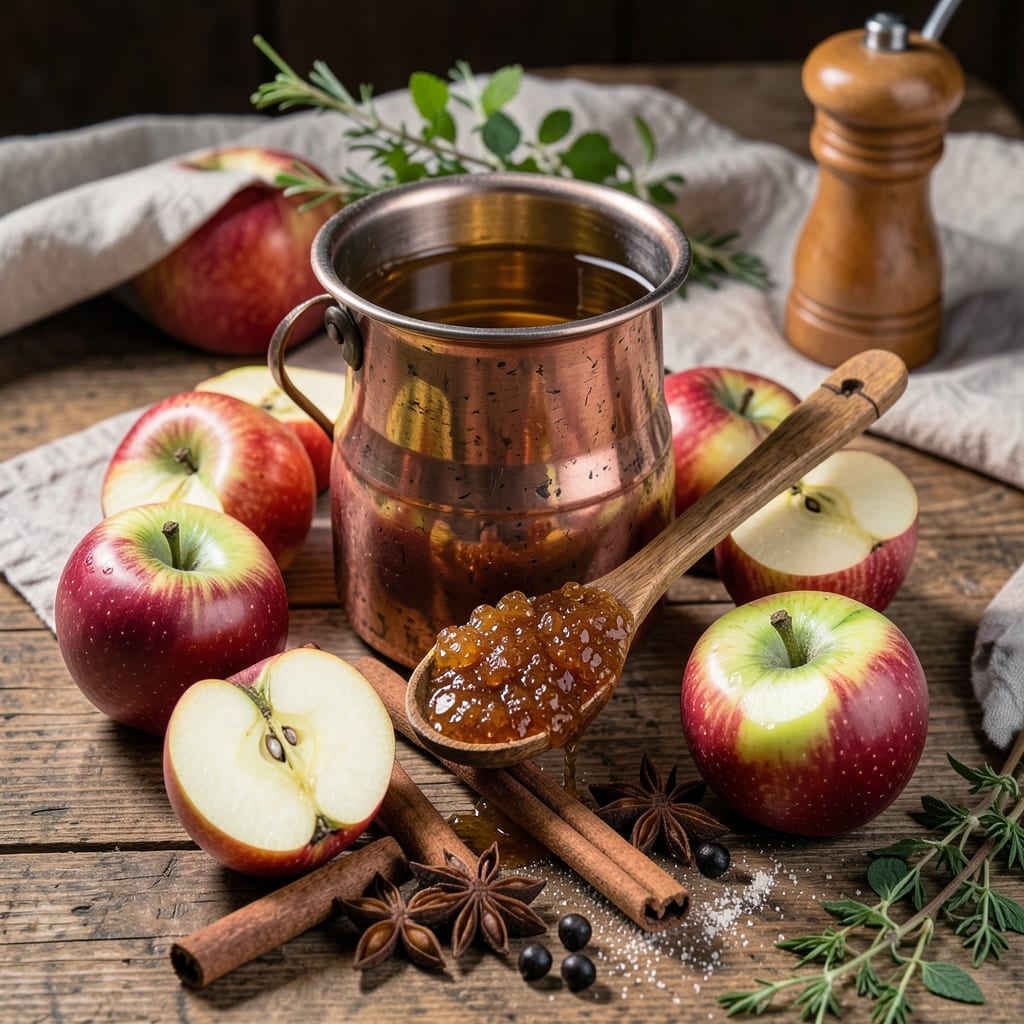
This apple brandy recipe UK transforms simple apples into a rich, spiced winter elixir that tastes like autumn in a bottle. ✨ The process begins with fermenting apple juice, then carefully distilling the liquid to capture its full aromatic depth—something that feels both traditional and deeply rewarding. I developed this method after years of experimenting with small-batch distilling, and it delivers results that rival commercial brands but with a homemade touch.
The beauty of this recipe lies in its simplicity: you start with fresh apples, sugar, yeast, and warm spices like cinnamon and cloves, then let nature do the work over several weeks. While traditional methods use pot stills, modern shortcuts like pre-fermented apple juice can cut the process time in half without sacrificing flavor. Safety is key, so I’ve included detailed guidance on alcohol content and legal distillation practices in the UK to ensure you stay compliant while crafting something extraordinary.
By the time you’re done, you’ll have a golden, fragrant brandy with warm spice notes that make it perfect for sipping neat, mixing into cocktails, or gifting during the holidays. The aging process—just a few months in a cool, dark place—deepens its character, turning it from a bright ferment into a smooth, complex spirit. This isn’t just a recipe; it’s a project that turns your kitchen into a still and your patience into something delicious.
Whether you’re a beginner or an experienced distiller, this method is designed to be approachable yet professional. The key is paying attention to the details—like temperature control during distillation and proper storage—so you end up with a brandy that’s as polished as it is flavorful. Let’s get started on creating something truly special.
Ingredients for apple brandy recipe uk
Four pounds of apples and a handful of spices kick off this British brandy tradition.
| Ingredient | Amount | Notes |
|---|---|---|
| Fresh Apples 🍎 | 4 lb | Crab apples or sweet varieties preferred |
| Granulated Sugar 🍚 | 2 cups | White or brown, organic preferred |
| Active Dry Yeast 🍞 | ¼ oz | Fresh yeast if available |
| Cinnamon Sticks 🌿 | 4 whole | Ceylon cinnamon for delicate flavor |
| Whole Cloves 🌶️ | 8 whole | Freshly ground for deeper aroma |
| Star Anise 🌟 | 4 whole | One per apple for balanced spice |
| Orange Peel 🍊 | 1 whole | Unwaxed, organic preferred |
| Distilled Water 💧 | 2 cups | Filtered for purity |
| Apple Pectin 🍇 | 1 tbsp | For fermentation clarity |
| Potassium Sorbate 🧪 | ½ tsp | Food-grade, for fermentation control |
| Lemon Juice 🍋 | 2 tbsp | Freshly squeezed, acid balance |
| Unsalted Butter 🧈 | 2 tbsp | For finishing richness |
The apples are non-negotiable—crab apples or sweet varieties like Cox’s or Braeburn work best. Local farm shops or farmers markets often carry these, and they’re worth hunting for. If you can’t find them, Granny Smiths will do in a pinch, but they’ll give a sharper finish. The yeast is critical: active dry yeast from a specialty store ensures a clean ferment. For the spices, Whole Foods or Penzeys carry high-quality Ceylon cinnamon and whole cloves—avoid pre-ground spices, as they lose potency quickly. The orange peel should be organic and unwaxed, so local greengrocers or online organic stores are your best bet. If you’re in the UK, Waitrose or M&S often stock these ingredients.
No crab apples? Substitute with a mix of Granny Smith and Braeburn—the tartness helps balance the sweetness. Running short on Ceylon cinnamon? Cassia works but use half the amount—it’s stronger. The star anise is optional but adds depth; if you skip it, double the cloves. For fermentation control, potassium sorbate from brewing supply shops is essential—it prevents over-fermentation. If you can’t find it, campden tablets (available at Amazon or homebrew stores) are a good alternative. The butter at the end is purely for richness—European-style butter like Plugrá adds a lovely depth, but any good-quality unsalted butter will do.
Store your fermenting mixture in a sterilized glass jar with an airlock or balloon to prevent contamination. Keep it in a cool, dark place (around 60-65°F) for 4-6 weeks, stirring gently every few days. Once fermented, the liquid should be strained through a fine mesh sieve into a clean container. For aging, use dark glass bottles and store in a cool, dark pantry for at least 3 months—longer aging deepens the flavor. The brandy will keep indefinitely in the bottle, but it’s best enjoyed after 6-12 months of aging. If you’re gifting, label the bottles clearly with the date and contents.
Why You'll Love This Recipe
- Pantry-Friendly Start: I’ll be real—this recipe uses stuff I already have. Cinnamon sticks and cloves? Probably gathering dust in your spice drawer. Fresh apples and sugar? Check. Yeast? That little packet you definitely bought for something else but never used. No last-minute grocery runs needed.
- Warm Spice Magic: That first sip? Pure autumn in a glass. The cloves and cinnamon don’t just hint at warmth—they punch through, like a cozy hug for your taste buds. And the apples? They soften just enough to release their natural sweetness without turning cloying. Honestly, it’s the kind of drink that makes you pause mid-sip and think, “Wait, is this actually homemade?”
- Holiday or Hangout Hero: Between us, this is my go-to for two very different moments: wrapping presents with the tree lights on and when my mates turn up unannounced. Serve it chilled in fancy glasses for a festive vibe, or let it sit at room temp in mugs for a no-fuss gathering. The yeast does the heavy lifting, so you’re free to actually enjoy the company instead of stressing over prep.
- Leftovers That Shine: Here’s what sold me—this stuff improves the second day. The flavors meld like old friends, and the alcohol mellows out just enough to make it even smoother. Stash a batch in the fridge, and you’ve got an instant pick-me-up for lazy Sundays or when you just need a break from coffee. Plus, it’s way cheaper than buying bottled brandy—like getting a spa treatment for your wallet.
Step-by-step instructions for crafting homemade apple brandy
Transforming fresh apples into rich, spiced brandy is simpler than you think—just follow these precise steps.
🍳 Step 1: Prepare and Simmer the Apple Base
Core and quarter the 4 lb fresh apples, removing any bruised spots. In a large, heavy-bottomed pot, combine the apple quarters with the 2 cups granulated sugar, 4 whole cinnamon sticks, 8 whole cloves, 4 whole star anise, and 1 whole orange peel. This aromatic blend will infuse the brandy with deep, warming spices.
Add the 2 cups distilled water and bring to a gentle boil over medium-high heat. Once boiling, reduce to low heat and simmer uncovered for 45-50 minutes, stirring occasionally. You'll know it's ready when the apples break down into a thick, fragrant purée and the liquid reduces by about one-third. The mixture should smell like a cozy winter spice market.
👨🍳 Step 2: Ferment the Apple Mixture
Remove the pot from heat and let it cool to room temperature—about 70-75°F. Once cooled, whisk in the 1 tbsp apple pectin and 2 tbsp lemon juice until fully dissolved. This step ensures clarity and balances the fermentation process.
Dissolve the 0.25 oz active dry yeast in ½ cup warm distilled water (about 105-110°F) and stir into the apple mixture. Cover the pot loosely with a clean kitchen towel or cheesecloth and let it ferment at room temperature for 48-72 hours. You'll know fermentation is active when you see bubbles forming and a light foam on top. This is where the magic happens—yeast converts sugars into alcohol, creating the brandy base.
🥘 Step 3: Strain and Clarify the Brandy
After fermentation, strain the mixture through a fine-mesh sieve or cheesecloth into a clean, sanitized container. Press the solids gently to extract all the liquid—this is where the flavor lives. Once strained, stir in the 0.5 tsp potassium sorbate to halt fermentation and preserve the brandy.
Let the brandy sit at room temperature for 24 hours to allow any remaining sediment to settle. Then, carefully pour the liquid through a coffee filter or clean cloth into a glass bottle or jar, leaving the sediment behind. This step ensures a crystal-clear, smooth finish—no gritty surprises when you pour.
⏰ Step 4: Age and Finish the Brandy
Store the brandy in a cool, dark place for at least 4-6 weeks, allowing the flavors to meld and mature. For extra richness, stir in the 2 tbsp unsalted butter during the last week of aging. This might sound unusual, but it adds a velvety texture and depth of flavor that elevates the brandy from homemade to extraordinary.
After aging, taste and adjust the sweetness by adding a touch more granulated sugar if needed. Serve chilled in small glasses as a digestif or use it to deglaze pans for a spiced apple sauce reduction. The result is a warm, spiced elixir that captures the essence of autumn—perfect for sipping by the fire.
Pro Tips For Making Apple Brandy Recipe Uk
- PEEL THE APPLES RIGHT: I learned this the hard way—skinning them first makes the whole process cleaner and faster. Use a paring knife to slice off just the skin, then chop into even chunks (about 1cm). No need to core them perfectly; just cut around the stem and remove it with a spoon. Messy but efficient.
- STEEP SPICES COLD FIRST: Toss your cinnamon sticks and whole cloves into the apple mixture while it’s still cold—this lets the spices infuse better before the yeast gets to work. If you add them later, they’ll just float on top like lazy guests at a party.
- WAIT FOR YEAST FOAM: Don’t rush the yeast activation. Stir in the sugar and yeast with warm (not hot) water, then let it sit for 10 minutes until you see a thick, bubbly foam on top. If it’s sluggish, your brandy might turn out flat—trust the process.
- USE A NON-REACTIVE POT: Aluminum or cheap stainless steel pots can react with the acidity of the apples, turning your brandy metallic-tasting. Stick to enamel, glass, or food-grade plastic for fermenting and cooking. It’s worth the extra £5 for a proper pot.
Essential equipment for perfect results
Fermentation Essentials
Your first piece of equipment is a large, heavy-bottomed pot—I swear by All-Clad stainless steel for even heat distribution. This pot needs to hold at least 8 quarts to accommodate the apple mixture and prevent boiling over during the 45-50 minute simmer. A fine-mesh strainer (like the OXO Good Grips) and cheesecloth are non-negotiable for straining—this removes solids while preserving flavor. Don’t skimp on quality here; cheap strainers clog easily and leave behind sediment. 🍎
Yeast Activation Tools
For yeast activation, a small glass jar (like a mason jar) and a digital kitchen thermometer are essential. I use the Thermoworks Thermapen ONE—it’s precise and fast. You’ll need to monitor the yeast water temperature between 105-110°F to ensure it activates properly without killing the yeast. A wooden spoon (not metal) helps stir gently to avoid creating a vortex that traps air. 🍞
Fermentation Safety Gear
Safety is critical when fermenting homemade spirits. A clean kitchen towel or cheesecloth covers the pot loosely to allow airflow while keeping out contaminants. For larger batches, an airlock fermentation lid (like the Air-Lock by Winco) prevents oxidation and keeps fermentation clean. Always store your fermenting mixture in a cool, dark place—I keep mine in a pantry corner away from direct sunlight. ⚡
Aging Containers
After fermentation, you’ll need dark glass bottles (like Amber Glass Winemaking Bottles) to age your brandy. These bottles protect the spirit from light, which can degrade flavors over time. For smaller batches, 1-liter glass jugs work well, while larger batches may require 5-liter carboys. Label each bottle with the date and contents—trust me, you’ll forget otherwise! Store them in a cool, dark pantry for at least 3 months to develop complexity. 💫
Optional Distillation Setup
If you’re distilling (not just fermenting), you’ll need a pot still or moonshine still—I recommend the Stainless Steel Pot Still by Copperhead Distilling. This setup includes a heat source, condenser, and collection vessel. For UK home distillers, check local laws—some regions require licensing. Always distill in a well-ventilated area and never exceed 190°F to avoid burning off flavors. Safety goggles and gloves are a must. 🔥
Nutrition facts
Frequently asked questions
Can I use store-bought apple juice instead of fresh apples?
Yes, but with adjustments! Use unpasteurized, organic apple juice (like Cloudy Apple Juice from UK stores) for fermentation. Add 1 extra cup of sugar per 4 cups of juice since store-bought juice is less concentrated. Skip the simmering step and proceed directly to fermentation. For best results, choose juice with no preservatives—check labels for "just apple juice" with nothing added.
How do I know when fermentation is complete?
Fermentation is done when bubbles slow to 1-2 per minute and the liquid smells sharp and vinegary (not sweet). Use a hydrometer for precision: the alcohol content should reach 8-12%. If you don’t have one, taste a small amount—it should be dry with no lingering sweetness. The process typically takes 48-72 hours, but some batches may need up to 5 days in cooler climates.
Is homemade apple brandy legal in the UK?
Legally, you can ferment (make wine/beer) at home without a license, but distilling alcohol requires a Home Distiller’s License from HM Revenue & Customs. For this recipe, we’re focusing on the fermented version (like apple wine), which is perfectly legal. If you want to distill, research UK laws carefully—penalties for illegal distillation include fines and equipment confiscation. Always check GOV.UK for current regulations.
Why did my brandy turn cloudy?
Cloudiness usually means yeast or bacteria contamination. This can happen if you didn’t sanitize equipment properly or if fermentation temperatures exceeded 75°F. To fix it, strain through a coffee filter and add ½ tsp potassium sorbate to halt any remaining activity. For severe cases, you may need to start over. Always use sterile tools and store your brandy in a cool, dark place to prevent future issues.
How strong is the alcohol content?
The finished brandy will have an alcohol content of 8-12% ABV (similar to light beer). For a stronger spirit, you’d need to distill—this recipe focuses on the fermented version. If you prefer higher proof, consider using more sugar (up to 3 cups) or fermenting longer. Always taste and adjust sweetness before aging, as residual sugar lowers the ABV. For cocktails, this strength works beautifully in apple brandy spritzers or mulled wine mixes.