
Sauces & Condiments
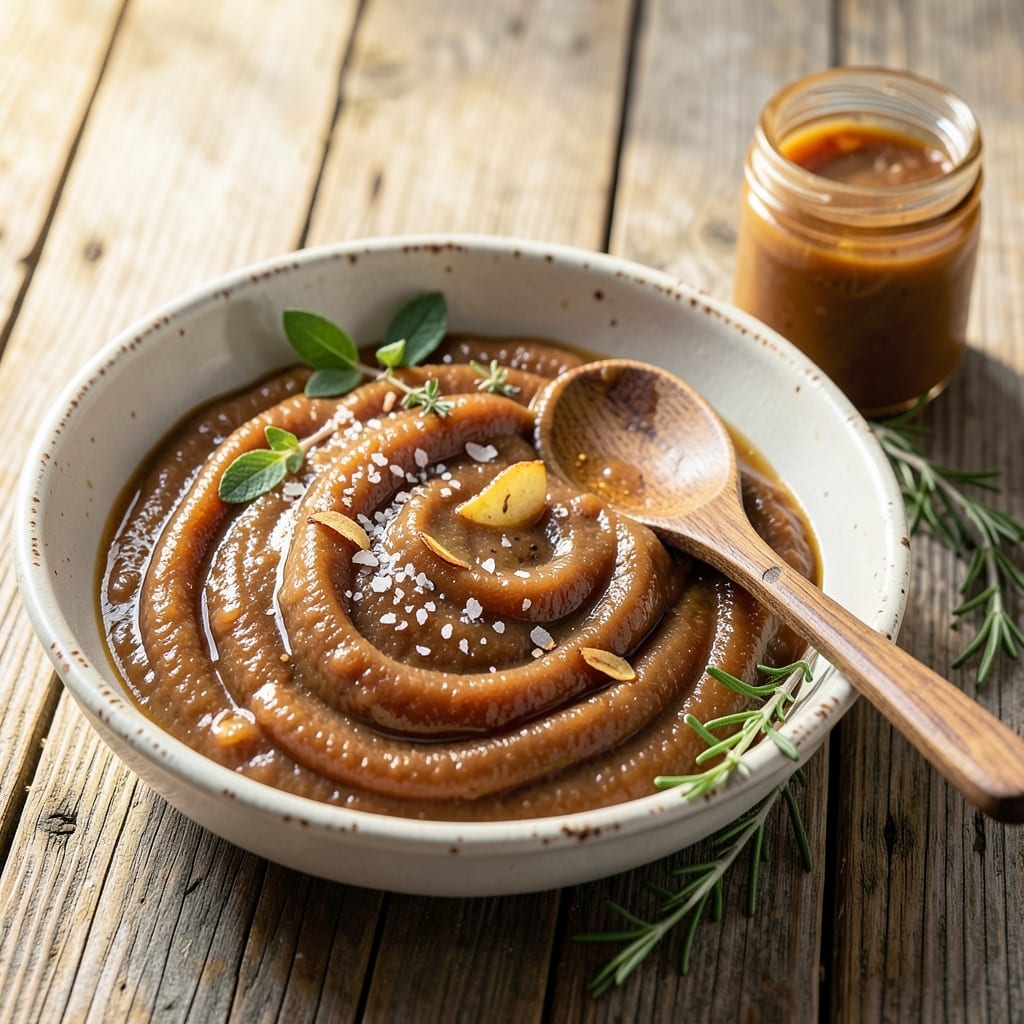
This apple butter recipe using apple cider vinegar transforms ordinary apples into a tangy-sweet spread with remarkable shelf life. The vinegar acts as a natural preservative while adding a subtle depth that balances the natural sweetness of the fruit. I developed this version after years of perfecting the texture—smooth, velvety, and perfect for spreading, glazing, or drizzling.
The process begins with peeling and cooking down apples until they break down into a thick, fragrant purée. Adding apple cider vinegar early in the cooking process enhances the flavor profile while extending freshness. A touch of cinnamon and a pinch of salt create warmth that complements both sweet and savory dishes.
What you’ll end up with is a versatile condiment that works as a breakfast spread, meat glaze, or dessert topping. The vinegar’s acidity keeps the flavor bright, preventing the butter from turning overly sweet or cloying. This method also yields a thicker consistency than traditional apple butter, making it ideal for drizzling over pancakes or brushing onto roasted pork.
Store it in an airtight container in the refrigerator for up to two weeks or freeze for extended use. The vinegar’s preservation properties mean you can enjoy this homemade apple butter long after store-bought versions would spoil. Ready to make a batch that stands out?
Ingredients for apple butter recipe using apple cider vinegar
Eight simple ingredients transform humble apples into a velvety, tangy-sweet spread perfect for spreading or drizzling.
| Ingredient | Amount | Notes |
|---|---|---|
| Apples (Mixed Varieties) 🍏 | 4 lb | Peeled, cored, cut into chunks |
| Apple Cider Vinegar 🍎 | ½ cup | Raw, unfiltered preferred |
| Granulated Sugar 🍚 | 1 ½ cups | Light brown sugar works too |
| Ground Cinnamon 🌿 | 2 tbsp | Ceylon preferred for delicate flavor |
| Sea Salt 🧂 | 1 tsp | Fine grain preferred |
| Water 💧 | ½ cup | Filtered or bottled |
| Lemon Juice 🍋 | 1 tbsp | Freshly squeezed |
| Vanilla Extract 🌸 | 1 tsp | Pure vanilla preferred |
Apples are the heart of this recipe, so don't skimp on quality. Honeycrisp or Granny Smith work beautifully together—the Honeycrisp adds sweetness while Granny Smith brings acidity. I always grab mine from Trader Joe's or the local orchard in season. If you can't find fresh apples, frozen unsweetened apple chunks work in a pinch (thaw first). The vinegar is key here—raw, unfiltered apple cider vinegar has more flavor than the clear stuff, and it preserves beautifully. Look for brands like Bragg or Organic Valley at natural food stores.
No apple cider vinegar? White vinegar plus 1 tsp extra sugar mimics the tang, though it won't preserve as long. Running low on brown sugar? White sugar plus 1 tsp molasses gets you close. Ceylon cinnamon is pricey but worth it—it's lighter and more aromatic than regular cinnamon. If you've only got cassia, reduce to 1.5 tbsp to avoid bitterness. The vanilla extract can be swapped for 1 tsp vanilla bean paste if you're feeling fancy. Fresh lemon juice is ideal, but bottled lemon juice works fine if you're in a hurry.
This apple butter thickens as it cools, so don't be alarmed if it looks thin while warm. For a smoother texture, blend with an immersion blender after cooking. Store in an airtight container in the fridge for 2 weeks or freeze for 6 months. I love keeping a small jar in the pantry for quick use—it stays fresh for 1 month at room temperature if you're okay with slightly softer texture. The vinegar's preservation properties mean you can enjoy this homemade version long after store-bought would spoil.
Why You'll Love This Recipe
- No Peel Required: Honestly, I love recipes that don’t demand perfection—just toss in whatever apples you have (cores, peels, bruises and all) after a quick chop. The vinegar does the work of tenderizing everything, so you’re not stuck scrubbing or slicing like it’s a fancy dessert.
- Tangy-Sweet Magic: That splash of apple cider vinegar? It’s the secret weapon—cuts through the sugar’s sweetness while adding this bright, almost caramelized depth. Spread it on toast or stir it into oatmeal, and you’ll taste why people go nuts for homemade over store-bought.
- Pantry Staple Upgrade: Between us, this stuff lasts forever—I’ve had jars from last autumn still sitting pretty. Use it to glaze ham for holidays, drizzle it over yogurt for breakfast, or even mix it into BBQ sauce. It’s the kind of thing that makes your fridge feel like a shortcut to cozy.
- Budget-Friendly Luxury: Apples are cheap, sugar’s a no-brainer, and vinegar? You probably already own it. For under $5, you’ve got enough to gift jars, stash for later, or eat it all in one go. No guilt, just pure, spreadable happiness that won’t break the bank.
Step-by-step instructions for homemade apple butter
Here's how to create rich, tangy apple butter with perfect balance and extended shelf life.
Combine Apples, Vinegar, and Water
In a large, heavy-bottomed pot, combine the 4 lb apples (mixed varieties), 0.5 cup apple cider vinegar, and 0.5 cup water. The vinegar not only adds that signature tang but also acts as a natural preservative, extending your apple butter's shelf life. Stir gently to ensure all apple pieces are submerged in the liquid.
Place the pot over medium-high heat and bring the mixture to a boil. Once boiling, reduce the heat to medium-low and let it simmer uncovered. You'll see the apples begin to break down and release their juices—this is where the magic starts. Keep the heat steady and let it cook for about 20-25 minutes, stirring occasionally to prevent sticking. You're looking for the apples to soften completely and the mixture to reduce by about half.
Add Sugar, Cinnamon, and Salt
Once the apples have fully broken down, stir in the 1.5 cups granulated sugar, 2 tbsp ground cinnamon, and 1 tsp sea salt. The sugar will help caramelize the apples, deepening their flavor, while the cinnamon and salt balance the sweetness with warmth and depth. Mix well to ensure even distribution of these ingredients throughout the mixture.
Increase the heat back to medium-high and bring the mixture to a boil again. Once boiling, reduce the heat to medium-low and let it simmer uncovered for another 30-45 minutes. During this time, the mixture will thicken significantly as the liquid continues to evaporate. Stir frequently to prevent burning at the bottom of the pot. You'll know it's ready when the mixture reaches a thick, spreadable consistency—similar to jam but with a smoother texture.
Finish with Lemon Juice and Vanilla
Remove the pot from heat and stir in the 1 tbsp lemon juice and 1 tsp vanilla extract. The lemon juice brightens the flavors and cuts through the richness, while the vanilla adds a subtle, aromatic depth. Let the mixture sit off the heat for 5-10 minutes to allow the flavors to meld together. This resting period is crucial—it lets the apple butter cool slightly and ensures all the flavors are fully integrated.
Once cooled, use an immersion blender to blend the mixture until smooth. If you don't have an immersion blender, you can transfer the apple butter to a food processor or blender in batches, blending until smooth. The texture should be velvety and spreadable, with no visible apple chunks. Taste and adjust the sweetness or tanginess if needed—add a bit more sugar if it's too tart, or a splash more vinegar if it's too sweet.
Store for Maximum Freshness
Transfer the apple butter to clean, sterilized jars while it's still warm. This helps create a vacuum seal as the jars cool, which extends shelf life. Seal the jars tightly and let them cool completely at room temperature before storing. Once cooled, the apple butter can be stored in the refrigerator for up to 3 months or in the freezer for up to 1 year. For even longer storage, you can process the jars in a water bath canner for 10 minutes to sterilize them, extending shelf life to 12 months in a cool, dark place.
The vinegar in this recipe not only enhances the flavor but also acts as a natural preservative, making this apple butter last longer than traditional recipes. Enjoy it on toast, mixed into oatmeal, or spread on fresh biscuits—it's a versatile and delicious addition to any breakfast or snack time!
Pro Tips For Making Apple Butter Recipe Using Apple Cider Vinegar
- PEEL AND CORE LIKE A PRO: Don’t waste time peeling apples—just quarter them, core them, and leave the skins on. The texture stays better, and the flavor’s richer, plus you skip the tedious scraping. (Yes, even the reds—peeling’s overrated here.)
- STIR EVERY 15 MINUTES: I learned this the hard way—skipping stir sessions means scorched bottoms and uneven cooking. Set a timer and give it your full attention, especially after the first hour when it’s most likely to stick.
- USE RAW APPLE CIDER VINEGAR: Store-bought pasteurized vinegar lacks the tang and depth of raw, unfiltered. If you can’t find raw, at least grab a bottle labeled “with the mother”—it makes a real difference in brightness and complexity.
- SALT THE APPLES FIRST: Toss your chopped apples with a pinch of sea salt before cooking—it draws out excess moisture and keeps the texture from getting mushy. Trust me, it’s the thing that matters most for a smooth, jammy finish.
Flavor customization for these flavors
Sweet-Tart Balance
Adjust the apple cider vinegar to sugar ratio to control tanginess. For a bold tang, use 0.75 cup vinegar and reduce sugar to 1.25 cups. For a milder balance, try 0.25 cup vinegar and 1.75 cups sugar. I find 0.5 cup vinegar and 1.5 cups sugar creates the perfect harmony—like a fall morning with just the right crispness. 🍎
Spice Variations
Swap cinnamon for nutmeg (1 tsp) and cardamom (½ tsp) for a Middle Eastern twist. Or add ½ tsp ginger and ¼ tsp cloves for warmth. For heat lovers, mix 1 tsp smoked paprika with the cinnamon—it adds depth that pairs beautifully with pork or sharp cheeses. Always toast whole spices first for maximum aroma!
Fruit Add-Ins
Fold in ½ cup dried cranberries (chopped) for a cranberry-apple fusion. Or stir in 1 cup cooked pear purée after blending for a softer texture. For a boozy kick, add 1 tbsp bourbon or apple brandy with the vanilla. These additions work best when added during the final 5 minutes of cooking to preserve their flavors. 🍐
Texture Tweaks
For a chunkier texture, skip blending and leave small apple pieces. For ultra-smooth, simmer longer until the mixture reaches 325°F on a candy thermometer (like jam). If too thick, thin with 1 tbsp water or vinegar. I’ve found that simmering uncovered for 5 extra minutes after blending creates the perfect velvety consistency.
Savory Adaptations
Reduce sugar to 1 cup and add 1 tsp mustard powder and ½ tsp black pepper for a savory glaze. This version shines on roasted pork shoulder or brisket. For umami depth, stir in 1 tbsp soy sauce during the final simmer. The vinegar’s acidity cuts through richness, making it ideal for meat dishes. Trust me, it’s a game-changer for holiday roasts! 🐷
Nutrition facts
Frequently asked questions
Can I use frozen apples instead of fresh?
Yes, but thaw them first to avoid excess liquid in your mixture. Use 4 lb thawed frozen apples (no need to peel if using organic frozen apples). Drain any excess water after thawing, then proceed with the recipe as written. The texture will be slightly softer but still delicious!
Why does my apple butter turn out too thin?
This usually happens if you didn't simmer long enough or used too much liquid. For a thicker consistency, simmer uncovered for 5-10 extra minutes after blending, stirring frequently. If it's still too thin, return to low heat and cook until reduced to desired thickness. The vinegar helps preserve but doesn't thicken—focus on evaporation time!
How does apple cider vinegar change the flavor?
The vinegar adds a subtle tang that brightens the sweetness and prevents the butter from tasting flat. It balances the natural sugars while extending shelf life. Think of it like adding a splash of lemon to apple pie—it enhances all the other flavors without overpowering them. The result is a more complex, well-rounded spread than traditional recipes.
Can I make this without a blender?
For a rustic texture, simply mash the cooked apples with a potato masher or fork until smooth. The mixture will be slightly chunkier but still delicious. If you prefer a smoother version, transfer to a food processor in batches and pulse until desired consistency is reached.
What's the best way to use up extra apple butter?
Spread it on warm biscuits or toast, drizzle over pancakes or waffles, or use as a glaze for roasted pork or chicken. For a sweet twist, mix into oatmeal or yogurt. The vinegar's tang makes it perfect for both sweet and savory applications—don't be afraid to experiment!