
Main Courses
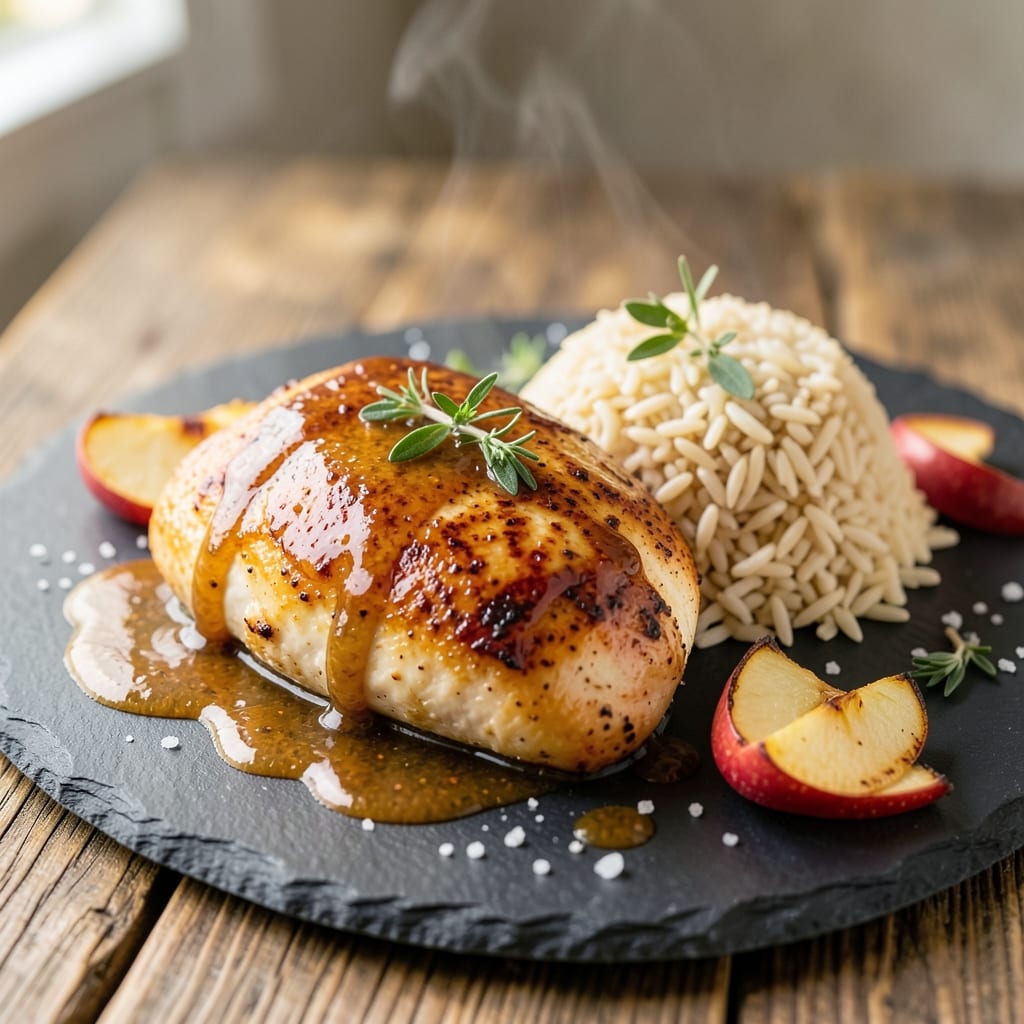
This apple cider BBQ chicken breast recipe delivers a perfect balance of sweet-spiced crust and juicy core—transforming simple chicken into a restaurant-worthy centerpiece. 🔥 The secret lies in a slow-marinated blend of apple cider vinegar and spices that tenderizes while building layers of flavor, ensuring every bite stays moist and packed with autumnal warmth.
What sets this recipe apart is the sauce—simmered low and slow until thick and glossy, with just enough tang to cut through the richness. I developed this method after years of perfecting my pitmaster techniques, combining classic BBQ traditions with the bright acidity of apple cider for a sauce that clings beautifully to the chicken without overpowering its natural flavor.
The result is golden-brown chicken with a crisp exterior and tender, juicy meat that falls apart at the touch of a fork. The apple cider marinade infuses the chicken with subtle sweetness and depth, while the BBQ glaze adds that signature caramelized finish. This is the kind of dish that makes weeknight dinners feel special—no shortcuts, just professional-level results.
Serve with roasted potatoes or a crisp apple slaw to round out the meal, or enjoy it as-is for a satisfying main course. The technique is straightforward but requires patience for the marinating and sauce reduction—trust me, it's worth every minute. Let's get cooking!
Ingredients for apple cider bbq chicken breast
Pantry staples meet pitmaster techniques for this restaurant-quality apple cider BBQ chicken.
| Ingredient | Amount | Notes |
|---|---|---|
| Boneless, Skinless Chicken Breast 🍗 | 1 ½ lb | Pounded to even thickness |
| Apple Cider Vinegar 🍏 | ½ cup | Raw, unfiltered preferred |
| Granulated Brown Sugar 🍚 | ½ cup | Light or dark variety |
| Smoked Paprika 🌶️ | 2 tbsp | For deep smoky flavor |
| Dried Thyme 🌿 | 1 tbsp | Or 1 tbsp fresh thyme |
| Ground Black Pepper 🌶️ | 1 ½ tsp | Freshly cracked preferred |
| Kosher Salt 🧂 | 1 ½ tsp | Diamond Crystal preferred |
| Garlic Cloves 🧄 | 4 cloves | Minced for marinade |
| Apple Cider 🍎 | 1 cup | Unfiltered for best flavor |
| Tomato Paste 🍅 | 2 tbsp | San Marzano preferred |
| Yellow Onion 🧅 | 1 whole | Diced for sauce base |
| Extra-Virgin Olive Oil 🫒 | ¼ cup | For sauce richness |
| Honey 🍯 | 2 tbsp | Wildflower preferred |
| Apple Cider Glaze 🍏 | ¼ cup | Reduced from cider |
| Fresh Parsley 🌿 | ¼ cup | Chopped for garnish |
The chicken breast quality makes all the difference here. Look for plump, uniform breasts at Whole Foods or your local butcher shop—they'll stay juicier during cooking. Pounding the breasts to even thickness ensures even cooking, and I always use Diamond Crystal kosher salt for its pure mineral content. For the apple cider vinegar, Bragg's is my go-to—it's raw, unfiltered, and packed with flavor. The brown sugar should be light for a subtle caramel note, but dark works if you prefer deeper molasses undertones. Store any unused vinegar or cider in glass jars in a cool pantry for up to 12 months.
No apple cider vinegar? Substitute white vinegar with an extra 1 tbsp of honey to balance the sweetness. Running short on brown sugar? White sugar plus 1 tsp molasses works in a pinch. The tomato paste can be swapped for crushed tomatoes at half the amount, though you'll lose some thickness. For the glaze, if you can't find quality apple cider, unsweetened apple juice reduced by half gives a similar sweet-tart profile. The parsley is purely decorative—skip it if you're out, but I always garnish with fresh herbs for that restaurant touch.
Marinate the chicken for at least 4 hours, but overnight is ideal for maximum tenderness. The sauce keeps well in the fridge for 5 days in an airtight container, and the cooked chicken reheats beautifully—just warm in a skillet with a splash of apple cider. For meal prep, store components separately: chicken in one container, sauce in another. Assemble just before serving to maintain that crisp crust. The glaze can be made ahead and reheated gently—it thickens as it cools, so add a splash of water if it becomes too stiff.
Why You'll Love This Recipe
- No-Fuss Weeknight Win: I swear by this one—just toss the chicken in a bowl with apple cider vinegar, brown sugar, and smoked paprika, then let the oven do the work. No flipping, no basting, no stress.
- Sweet-Savory Magic: That caramelized brown sugar glaze? It’s the star. The vinegar cuts through the richness while the thyme adds earthy warmth, making every bite taste like a fall afternoon.
- Leftovers That Don’t Suck: Between us, most BBQ chicken turns dry by day three. Not this. The apple cider keeps it moist, so I meal prep it all weekend—sandwiches, salads, you name it.
- Budget-Friendly Crowd-Pleaser: Chicken breasts are cheap, and this recipe stretches further than takeout. Serve it at game day, potlucks, or just a lazy Friday—everyone’s happy, and your wallet stays full.
Step-by-step instructions for apple cider BBQ chicken breast
Master this sweet-spiced crust technique for perfectly juicy chicken every time.
👨🍳 Step 1: Create the Dry Rub and Wet Marinade
In a medium bowl, combine the 0.5 cup granulated brown sugar, 2 tbsp smoked paprika, 1 tbsp dried thyme, 1.5 tsp ground black pepper, and 1.5 tsp kosher salt. Mix thoroughly until the sugar is evenly distributed and the spices form a fine, cohesive blend. This dry rub will create that signature caramelized crust.
In a separate bowl, whisk together the 0.5 cup apple cider vinegar, 1 cup apple cider, 2 tbsp honey, and the 4 minced garlic cloves. This tangy-sweet marinade will penetrate the chicken, ensuring deep flavor and moisture retention. The vinegar helps tenderize the meat while the honey adds natural sweetness that caramelizes beautifully during cooking.
🍳 Step 2: Pound and Marinate the Chicken
Place the 1.5 lb boneless, skinless chicken breast between two sheets of plastic wrap. Using a meat mallet, pound the chicken to an even ½-inch thickness throughout. This ensures even cooking and prevents the center from staying undercooked while the edges overcook. Work quickly to avoid tearing the meat.
Generously coat both sides of the pounded chicken with the wet marinade, pressing it into the meat so it absorbs fully. Then, apply the dry rub evenly on all surfaces, pressing firmly so it adheres. Place the chicken on a plate, cover with plastic wrap, and refrigerate for at least 4 hours or overnight. The longer it marinates, the more flavorful and tender the result.
🔥 Step 3: Sear for Crust Development
Remove the chicken from the refrigerator 30 minutes before cooking to bring it to room temperature. Heat a large oven-safe skillet over medium-high heat and add 0.25 cup extra-virgin olive oil. Once the oil shimmers (around 350°F), carefully place the chicken in the skillet. Cook undisturbed for 3-4 minutes per side until the rub develops a deep golden-brown crust and the internal temperature reaches 155°F.
Here's where the magic happens: the caramelization begins. You'll see bubbles forming and the rub sticking to the pan—this is your signal that the crust is forming. Don't press down on the chicken; this prevents proper browning. Transfer the skillet to a 400°F preheated oven for 10-12 minutes to finish cooking through to 165°F internal temperature.
🥘 Step 4: Prepare the Apple Cider Sauce
While the chicken cooks, heat 2 tbsp tomato paste in a small saucepan over medium heat for 1 minute until fragrant. Add the 1 whole diced yellow onion and cook for 5 minutes until softened. Pour in the remaining ½ cup apple cider (after reserving 0.25 cup for the glaze) and simmer for 8-10 minutes until reduced by half and slightly thickened.
Stir in the 0.25 cup apple cider glaze and 2 tbsp honey, then simmer for another 3 minutes until the sauce coats the back of a spoon. Season with an additional pinch of kosher salt and ground black pepper if needed. The sauce should be glossy with a balance of sweet, tangy, and smoky flavors—this is your finishing touch.
⏰ Step 5: Rest and Serve with Garnish
Remove the chicken from the oven and let it rest on a cutting board for 10 minutes before slicing. This resting period allows the juices to redistribute, preventing them from pooling on the cutting board. The internal temperature will rise another 5°F during this time, ensuring it's perfectly cooked.
Slice the chicken into ½-inch thick cutlets and drizzle generously with the apple cider sauce. Garnish with 0.25 cup chopped fresh parsley for a pop of color and freshness. Serve immediately with the remaining sauce spooned over the top—each bite should deliver that perfect balance of sweet, smoky, and tangy flavors with a juicy, tender core.
Pro Tips For Making Apple Cider Bbq Chicken Breast
- Brine the Chicken First: I learned this the hard way—dry chicken breast is the enemy of crispy edges. Toss the raw breasts in a mix of 1 cup apple cider vinegar, 2 tablespoons brown sugar, and 1 teaspoon salt for 15 minutes before cooking. The acid tenderizes the meat while the sugar starts caramelizing early, giving you that sticky, smoky crust without overcooking the center.
- Use a Mix of Wet and Dry Rub: Skip the all-liquid glaze if you want depth. After searing the chicken, brush on half the sauce (vinegar + sugar reduced) and sprinkle smoked paprika and thyme directly on the meat. The dry spices cling better and toast faster, adding a layer of flavor that just dipping can’t match.
- Sear High, Finish Low: Crank the heat to medium-high for the first 3 minutes to get a golden crust, then drop to medium-low and cover with foil. Chicken breast dries out fast, and this two-step method guarantees juicy meat while the sauce caramelizes. (Yes, even if you’re impatient like me.)
- Deglaze the Pan: After searing the chicken, don’t walk away—scrape up those browned bits with a wooden spoon and toss them into your sauce. Those bits pack more flavor than you’d think, and it takes 30 seconds. I used to skip this, and my sauce always tasted flat until I tried it.
Serving suggestions for leftovers
Classic BBQ Sides
This apple cider BBQ chicken shines with creamy coleslaw—I toss 4 cups shredded cabbage and 2 carrots with ½ cup mayonnaise, 1 tbsp apple cider vinegar, and 1 tsp Dijon mustard. The tangy crunch cuts through the rich chicken beautifully. For a heartier option, serve with garlic mashed potatoes—mix 2 lbs Yukon Gold potatoes with ½ cup sour cream, 4 tbsp butter, and 3 minced garlic cloves. Both sides reheat perfectly for meal prep. 🥗
Autumnal Vegetables
Roasted butternut squash adds seasonal depth—toss 2 cups cubed squash with 1 tbsp olive oil, ½ tsp smoked paprika, and ¼ tsp salt, then roast at 400°F for 25 minutes. The natural sweetness complements the BBQ sauce wonderfully. For a lighter touch, serve with sautéed green beans—cook 1 lb green beans in 1 tbsp butter with 2 minced garlic cloves for 5 minutes. Both veggies bring vibrant colors to your plate. 🍂
Bread Pairings
No BBQ meal is complete without bread! Warm cornbread muffins—mix 1 cup cornmeal, 1 cup flour, 1 tbsp sugar, and 1 tsp baking powder, then bake at 375°F for 15 minutes—soak up the sauce beautifully. For a crusty option, serve with sourdough slices toasted with 2 tbsp butter and a sprinkle of flaky sea salt. Both pairings add texture contrast to the tender chicken. 🍞
Dessert Harmony
Finish the meal with apple cider caramel—simmer 1 cup apple cider with ½ cup brown sugar and 2 tbsp butter until thickened, then drizzle over vanilla ice cream. The familiar apple notes tie back to your main dish perfectly. For a lighter option, serve with warm apple crisp—top 4 sliced apples with ½ cup oatmeal crumble and bake at 350°F for 30 minutes. Both desserts enhance the autumnal theme. 🍎
Make-Ahead Serving
Prep sides ahead to streamline serving: store coleslaw in an airtight container for up to 3 days or freeze mashed potatoes for 1 month. Reheat coleslaw in the microwave for 1 minute, while potatoes reheat best in a skillet with 1 tbsp milk over medium heat. Keep bread warm in a 200°F oven until ready to serve. This lets you focus on plating the star—your perfectly glazed chicken. ✨
Nutrition facts
Frequently asked questions
Can I use boneless, skin-on chicken breasts instead?
Yes, but you'll need to adjust the cooking time slightly. Skin-on breasts will take about 1-2 extra minutes per side to render the fat and crisp the skin. Remove the skin before serving if you prefer a cleaner bite, or leave it on for added flavor and texture. Just monitor the internal temperature closely—it should still reach 165°F.
How do I prevent the chicken from drying out?
The key is proper marinating and avoiding overcooking. Pound the chicken to even thickness and marinate for at least 4 hours (overnight is best). When cooking, use a meat thermometer and remove the chicken at 155°F—it will rise to 165°F while resting. Also, don't skip the olive oil in the skillet, as it helps create a protective barrier.
Can I make this recipe in a slow cooker?
For a slow-cooker version, marinate the chicken as directed, then place it in the slow cooker with ½ cup apple cider and 1 tbsp honey. Cook on low for 4-5 hours or high for 2-3 hours. The sauce will reduce naturally. Finish by searing the chicken in a skillet for 2-3 minutes per side to create that caramelized crust before serving.
What's the best way to reheat leftovers?
Reheat leftovers gently to preserve moisture. Place chicken pieces in a skillet over medium-low heat with a splash of apple cider or water, covering with a lid for 3-5 minutes. Avoid microwaving—it can make the chicken rubbery. For the sauce, reheat in a saucepan over low heat until warmed through, adding a splash of water if it thickens too much.
Can I substitute apple cider vinegar with something else?
Yes, but adjust the sweetness balance. Use white vinegar and add an extra 1 tbsp honey to the marinade. For a fruitier option, try lemon juice with 1 tsp sugar instead. The acidity is what tenderizes the chicken and balances the sweetness in the sauce, so don't skip it entirely.