
Beverages
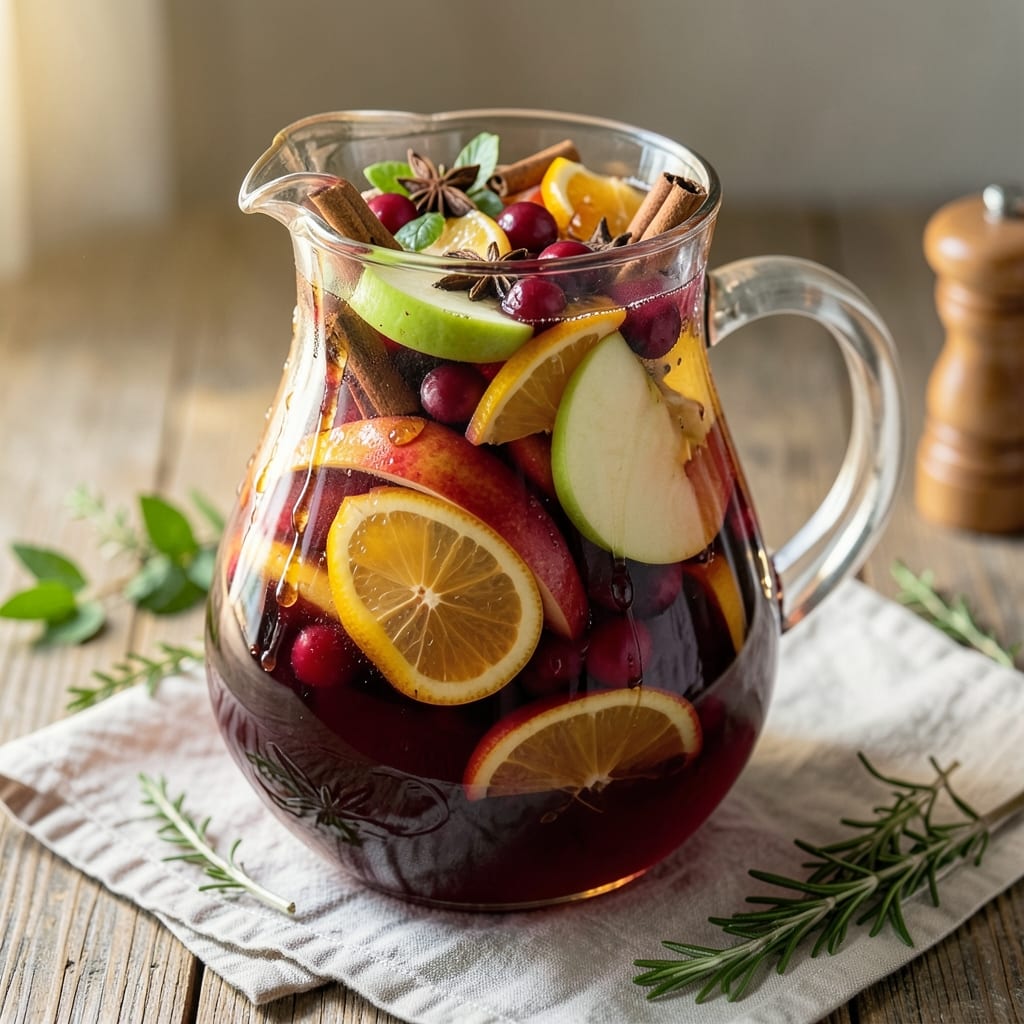
This apple cider red sangria recipe transforms fall flavors into a warm, spiced sipper that feels like a cozy hug in a glass. 🍂 The perfect blend of rich red wine, apple cider, and seasonal fruit creates a drink that’s bold yet balanced—ideal for chilly evenings or festive gatherings. What sets this version apart is the aromatic twist of cinnamon and clove, which infuse the sangria with deep, comforting warmth without overpowering the natural fruit sweetness.
The beauty of this recipe lies in its simplicity: just 10 ingredients and 15 minutes of prep time, yet the flavors develop beautifully as it chills. The key is layering the spices and fruit strategically—letting the apple cider and wine meld together while the fruit releases its juices gradually. This isn’t just a drink; it’s an experience that evolves with every sip, making it perfect for sipping slowly or serving to a crowd.
By the time you’re ready to serve, you’ll have a vibrant, aromatic sangria with golden-red hues and a perfect balance of sweet, tart, and spiced notes. The spices settle into the drink, creating a subtle warmth that pairs perfectly with the crisp apple cider. Serve it chilled in elegant glasses with a cinnamon stick garnish for an extra touch of sophistication.
Leftovers? No problem—this sangria actually tastes better the next day as the flavors deepen. Store it in the fridge for up to 3 days, and give it a gentle stir before serving. Whether you’re hosting a fall gathering or simply craving a comforting drink, this recipe delivers restaurant-quality results with minimal effort.
Ingredients for apple cider red sangria
Ten cozy ingredients for a sangria that tastes like autumn in a glass.
| Ingredient | Amount | Notes |
|---|---|---|
| Dry Red Wine 🍷 | 4 cups | Bold and dry variety like Cabernet Sauvignon |
| Apple Cider 🍎 | 2 cups | Unpasteurized for best flavor |
| Red Apple Slices 🍎 | 1 ½ cups | Fujis or Gala, peeled and cored |
| Green Apple Slices 🍎 | 1 cup | Granny Smith for tartness |
| Orange Slices 🍊 | 1 cup | Navel or Valencia, peeled |
| Cranberries 🍇 | ½ cup | Fresh or frozen, whole |
| Cinnamon Sticks 🌿 | 2 whole | For stirring and garnish |
| Whole Cloves 🌶️ | 4 whole | For aromatic depth |
| Orange Juice 🍊 | ½ cup | Freshly squeezed |
| Granulated Sugar 🍚 | ¼ cup | Adjust to taste |
The wine is non-negotiable—Cabernet Sauvignon or Merlot work best, but whatever bold red you have open will do. Apple cider is where the magic happens: unpasteurized has more flavor, and Trader Joe's or Costco carry great options. For the apples, Fujis for sweetness and Granny Smiths for tartness create the perfect balance. Oranges add brightness, so grab a couple—navel oranges peel easiest. Pro tip: Buy pre-washed to save time.
No Granny Smiths? Green apples from the salad bar work in a pinch. Cranberries too tart? Mix with a splash of orange juice to mellow them out. The spices are key: cinnamon sticks should be whole (no ground dust), and whole cloves pack more punch than pre-ground. Sugar is totally adjustable—start with less if your fruit is naturally sweet. Want extra richness? Add 2 tbsp brandy or 1 tbsp orange liqueur.
This sangria gets better with time—3-4 hours in the fridge lets flavors meld perfectly. Store in a glass pitcher (plastic absorbs flavors) and keep the cinnamon sticks in for extra aroma. Garnish with an orange slice and clove for presentation. Leftovers? 5 days max—the spices can get overpowering if left too long.
Why You'll Love This Recipe
- Here’s the thing: this sangria only gets better as it chills. The flavors meld overnight, and I’ve had it last five days in the fridge—still delicious, still crowd-pleasing. Plus, it’s cheaper than ordering cocktails, so you’ll save cash while impressing everyone. Win-win.
- No-Fuss Assembly: I swear by this recipe because it’s the kind of drink that lets you set it and forget it. Toss in your wine, cider, and fruit—no peeling, no seeding, no fuss—just let it sit while you handle dinner or chat with guests. That first sip? All the work was worth it.
- Sweet-Tart Magic: The apple cider and red wine combo is chef’s kiss—bright, slightly spiced, with that perfect balance of sweet and tart. Add the green apple slices for a crisp bite, and the orange rounds? They lift the whole thing like a citrusy hug.
- Weekend or Weeknight: Between us, this is my go-to for anything—brunch with friends, a lazy Sunday, or even a quick gathering. It’s light enough for daytime but rich enough to sip at night, and the fruit keeps it refreshing no matter the hour.
Step-by-step instructions for apple cider red sangria
This spiced autumn sipper comes together in minutes, blending rich wine with vibrant fruit and warm spices.
🍳 Step 1: Combine the Base Ingredients
In a large glass pitcher or bowl, pour in the 4 cups dry red wine and 2 cups apple cider. Give it a gentle stir to begin mixing the flavors. The wine should be a bold variety like Cabernet Sauvignon—its depth will shine through the fruit infusion. I like to use unpasteurized apple cider for that authentic, slightly cloudy texture and richer taste.
Next, add the 0.5 cup orange juice and 0.25 cup granulated sugar. Stir until the sugar dissolves completely. This step is crucial—if sugar remains undissolved, it can create an unpleasantly gritty texture in your sangria. Taste the mixture now and adjust the sugar to your preference, adding a little more if you prefer it sweeter or a splash of water if it's too strong for your taste.
👨🍳 Step 2: Add the Fruit and Spices
Gently fold in the 1.5 cups red apple slices, 1 cup green apple slices, 1 cup orange slices, and 0.5 cup cranberries. I always use a large spoon to avoid crushing the fruit—you want the pieces to stay intact so they release their juices gradually as the sangria chills. The tart Granny Smith apples will balance the sweetness of the red apples and oranges beautifully.
Add the 2 whole cinnamon sticks and 4 whole cloves to the pitcher. These spices will infuse the sangria with warm, comforting aromas. Give everything another stir, making sure the spices are fully submerged. If you're using a pitcher with a lid, this is a good time to secure it loosely—it'll help contain any potential spills while still allowing the flavors to meld.
⏰ Step 3: Chill and Infuse
Cover the pitcher and refrigerate for at least 4 hours, but ideally overnight. This chilling time is where the magic happens—the flavors meld together, the fruit softens slightly, and the spices release their aromatic oils. I know it's tempting to rush this step, but patience pays off with a more complex, balanced drink.
After chilling, give the sangria a good stir before serving. The fruit will have released some of its juices, and the spices will have infused the liquid with their warm, comforting notes. The sangria should have a beautiful ruby-red color with hints of orange and green from the fruit. If you prefer it colder, you can add ice cubes just before serving.
🍽️ Step 4: Serve with Style
Pour the sangria into glasses, using a fine-mesh strainer if you prefer a smoother texture without fruit pieces. I like to serve it in wine glasses to appreciate the beautiful layers of color and aroma. Garnish each glass with a cinnamon stick and a few cranberries for both visual appeal and an extra burst of flavor.
Serve immediately with a slice of crusty bread or a selection of autumnal cheeses. The sangria pairs beautifully with sharp cheddar or creamy brie. For an extra touch, you can even serve it in a large pitcher with the fruit and spices visible—it makes for a stunning centerpiece at any gathering. Enjoy your refreshing, spiced apple cider sangria while it's still cold and flavorful!
Pro Tips For Making Apple Cider Red Sangria
- CHILL THE CIDER FIRST: Cold apple cider mixes faster and keeps the sangria from getting watery. Pour it straight from the fridge into your pitcher—no need to thaw or dilute. I learned this the hard way after making a batch where the cider sat at room temp for too long and turned the wine into a sad, weak punch.
- PEEL ORANGES FOR MAX FLAVOR: Skip the peels if you want bright citrus notes—thick orange slices work, but the zest dissolves faster and adds a zesty kick. Use a peeler to remove just the outer layer, then slice the rest thinly. (Yes, it’s more work, but your guests will notice the difference.)
- DON’T OVERCROWD THE FRUIT: Too many apple slices? The wine won’t infuse properly—it’ll just turn murky and taste like fruit salad. Aim for 1-2 slices per glass served, and toss in the oranges last so they don’t get mushy. I used to double the fruit, and it always ended up tasting like a smoothie.
- STIR ONCE, NOT CONSTANTLY: Sangria needs time to breathe, not constant agitation. Stir gently once when you mix the wine and cider, then let it sit. Checking it every 10 minutes just dilutes the flavors. Trust the process—it’ll taste better if you leave it alone. (I know, I know, but trust the process.)
Common mistakes when making this dish
Over-Spicing the Sangria
I’ve made this mistake more times than I’d like to admit—adding too much cinnamon or cloves can turn your sangria from cozy to overwhelming. Stick to the 2 cinnamon sticks and 4 whole cloves called for in the recipe. If you love spice, try adding them to individual glasses instead of the pitcher, so everyone can customize their flavor. Remember, spices infuse gradually, so start with less and adjust as you go. 🌶️
Not Letting It Chill
Rushing the 4-hour chilling time is a big no-no. The flavors need time to meld, and the fruit must release its juices for that perfect balance. If you’re short on time, at least let it sit for 2 hours—but trust me, the longer it chills, the better it tastes. I’ve had sangria that was ready in 30 minutes, and it was just… sad. Patience is key here!
Using the Wrong Wine
Not all red wines are created equal for sangria. Light, acidic wines like Pinot Noir can get lost among the fruit flavors, while bold, dry wines like Cabernet Sauvignon or Merlot hold up beautifully. If you’re using a cheaper wine, look for one with at least 12-13% alcohol to balance the sweetness. Pro tip: Avoid wines with strong oak notes—they can clash with the apple cider’s natural flavors.
Crushing the Fruit
When adding the fruit, resist the urge to chop it finely or mash it. Whole slices and berries release their juices gradually, keeping the sangria from becoming watery too quickly. If you’re worried about presentation, use a sharp knife to cut the fruit into ¼-inch thick slices. The texture contrast between the fruit and the liquid is part of the charm—don’t ruin it by over-mashing! 🍎
Skipping the Sugar Adjustment
Every apple cider and wine has a different sweetness level, so tasting and adjusting the sugar is non-negotiable. Start with the ¼ cup granulated sugar, but don’t be afraid to add more or less based on your taste. If your sangria tastes too strong, a splash of water or extra fruit juice can help balance it out. I’ve had sangria that was cloyingly sweet because I didn’t taste-test—don’t make the same mistake!
Using Plastic Containers
Plastic pitchers or containers can absorb flavors and leave a weird aftertaste in your sangria. Always use a glass pitcher (like a large mason jar or a wine dispenser) to keep the flavors pure. If you’re serving it in a pitcher, make sure it’s food-grade glass—no cheap plastic here! Trust me, the difference is noticeable, especially after a few hours of chilling. 🥃
Nutrition facts
Frequently asked questions
Can I make this sangria without alcohol?
Yes! Swap the red wine for 4 cups non-alcoholic red wine or grape juice (like Concord) and use 1 cup extra apple cider to maintain balance. Add 1 tbsp brandy extract (alcohol-free) for depth. The spices and fruit will still shine through beautifully.
How long will the sangria keep in the fridge?
This sangria stays fresh for 3-5 days in the fridge, but it actually tastes better after 24 hours as flavors meld. Store in a sealed glass pitcher and keep the cinnamon sticks in for maximum aroma. After 5 days, the spices may overpower the drink, so enjoy within that window.
What's the best way to serve it?
Use wine glasses to showcase the vibrant colors and aromas, or serve in a large pitcher with ice for a festive centerpiece. Garnish each glass with a cinnamon stick and cranberries. Pair with cheese boards (sharp cheddar or brie) or warm spiced nuts for the ultimate autumn spread.
Can I use frozen fruit instead of fresh?
Frozen apples and cranberries work perfectly—they'll soften slightly, releasing more juice. Just thaw them first and drain excess water. For oranges, stick with fresh slices since frozen versions often lose their vibrant color. The texture difference is minimal if you use ¼-inch thick slices for both.
Why does my sangria taste too strong?
This usually happens when the wine's alcohol dominates. Balance it by adding ½ cup extra apple cider or orange juice, or serve over ice to dilute slightly. If the spices are too intense, remove the cinnamon sticks and cloves before serving. Taste as you go—adjustments are easy with this recipe!