
Beverages
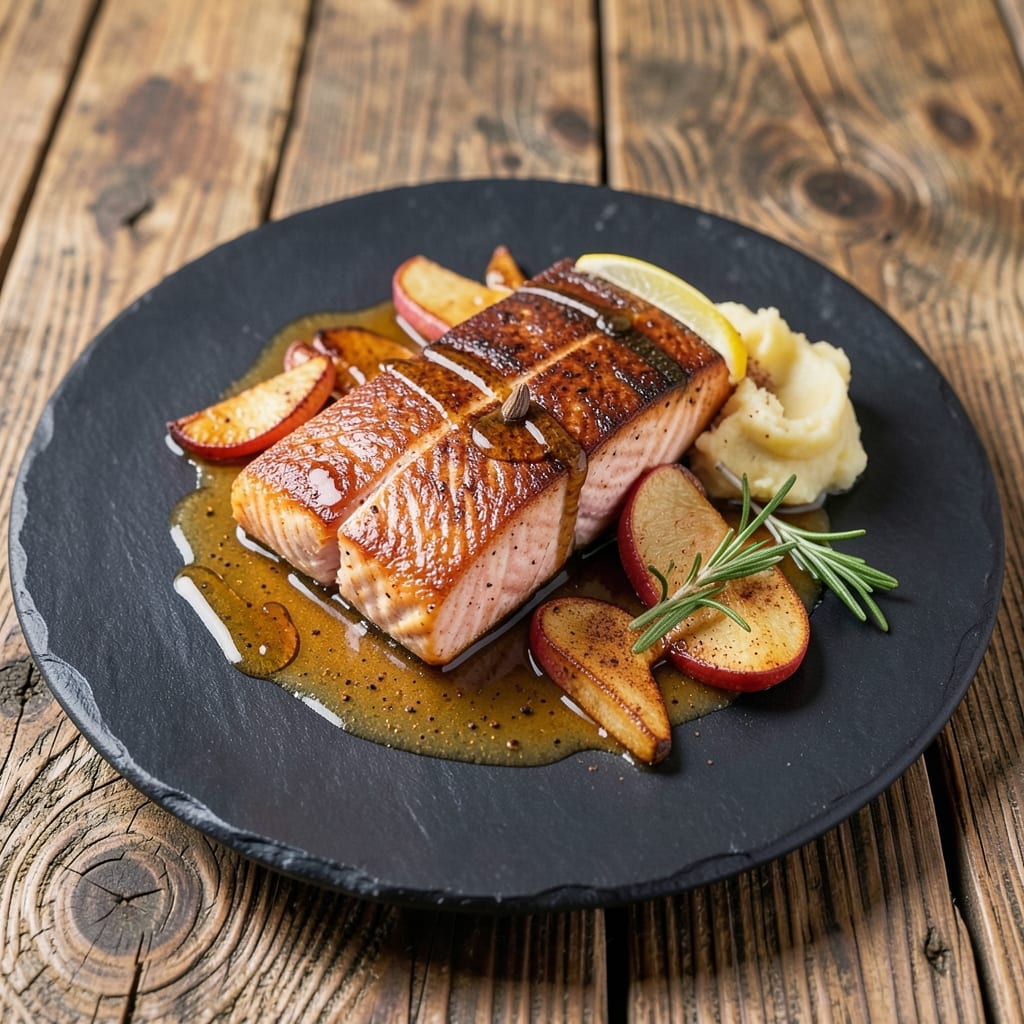
This apple cider salmon recipe transforms ordinary weeknight dinner into a restaurant-worthy meal with just a few simple ingredients. The sweet-spiced glaze made from apple cider, brown sugar, and warm spices like cinnamon and cloves caramelizes beautifully during pan-searing, creating a perfect balance of sweetness and savory depth that complements the salmon's delicate flavor. What makes this recipe truly special is how effortlessly it elevates basic salmon into something luxurious—no fancy techniques required, just a cast-iron skillet and 20 minutes of focused time.
The magic happens when the apple cider glaze reduces into a sticky, aromatic sauce that clings to the salmon, locking in moisture while creating a beautiful caramelized crust. This recipe delivers perfect results every time—juicy, flaky salmon with a glossy glaze that's both sweet and subtly spiced, never overpowering. The glaze also works beautifully as a pan sauce for serving, drizzled generously over each piece to tie the entire dish together. It's the kind of recipe that makes you feel like you've outdone yourself, even when you're just cooking at home.
Pair this dish with roasted asparagus or a simple quinoa salad to round out the meal, and you've got a complete dinner that's impressive enough for guests but simple enough for any night of the week. The apple cider glaze adds a seasonal touch that works perfectly in fall and winter, but its warm flavors make it a crowd-pleaser year-round. Whether you're serving it for a special occasion or just treating yourself to something delicious, this recipe delivers restaurant-quality results with minimal effort.
What sets this recipe apart is the way the apple cider's natural sweetness and acidity work together to create a glaze that's both complex and approachable. The spices add warmth without overpowering, and the caramelization during cooking deepens the flavors into something truly special. The best part? This recipe scales easily—whether you're cooking for two or feeding a crowd, the same technique works perfectly every time. Let's get cooking!
Ingredients for apple cider salmon
Sweet-spiced glaze meets flaky salmon—just these 12 ingredients transform dinner into something special.
| Ingredient | Amount | Notes |
|---|---|---|
| Salmon Fillets 🐟 | 4 pieces | Skin-on, 6 oz each, center-cut |
| Unsalted Butter 🧈 | 2 tbsp | Cold, cubed for searing |
| Apple Cider 🍎 | ½ cup | Unfiltered, seasonal preferred |
| Light Brown Sugar 🍚 | 2 tbsp | Packed, for caramelization |
| Ground Cinnamon 🌿 | ½ tsp | Freshly ground for warmth |
| Ground Cloves 🌶️ | ¼ tsp | Whole cloves crushed preferred |
| Fresh Thyme Leaves 🌿 | 1 tbsp | Chopped, stems removed |
| Extra-Virgin Olive Oil 🫒 | 1 tbsp | For skillet coating |
| Fresh Lemon Juice 🍋 | 1 tbsp | Brightens the glaze |
| Kosher Salt 🧂 | 1 tsp | Diamond Crystal preferred |
| Freshly Ground Black Pepper 🌶️ | ½ tsp | For seasoning salmon |
| Fresh Parsley 🌿 | ¼ cup | Chopped, for garnish |
The salmon is everything here—center-cut fillets with skin-on stay together better and crisp beautifully. Grab the thickest pieces you can find at Whole Foods or your fishmonger (they'll usually cut them to size). If using frozen, thaw overnight in the fridge—never in cold water. The skin side should be smooth and intact, not flaky or discolored. For extra insurance, pat dry with paper towels before cooking—this helps the butter cling and creates a perfect crust. I always buy extra because this recipe scales so well for leftovers.
No apple cider? Unfiltered cranberry juice at half the amount works in a pinch, but the depth of flavor is totally different. The brown sugar can be swapped for maple syrup if you're avoiding refined sugar—just reduce by 1 tbsp. Want more spice? Add a pinch of cayenne to the glaze. The butter is non-negotiable though—use full-fat, never margarine. For the thyme, fresh is ideal, but dried at one-third the amount gets you close. And if you can't find cloves, allspice or nutmeg add warmth without the same punch. The lemon juice? Fresh is best, but bottled works if you're in a hurry—just add a pinch of salt to mimic the brightness.
This glaze reheats beautifully—simmer leftover sauce in a small pot for 2-3 minutes until thickened. Store salmon in an airtight container with a thin layer of glaze on top for up to 3 days. Freeze for 2 months by wrapping each piece tightly in plastic. The glaze keeps in the fridge for 1 week—make extra for pancakes or roasted veggies. I always double the recipe because the leftovers make an amazing pan sauce for eggs the next morning. Garnish with parsley right before serving—it keeps vibrant for about 10 minutes before wilting.
Why You'll Love This Recipe
- Fewer Ingredients, More Magic: I swear by this recipe because it’s that good—just five ingredients, and the apple cider glaze cuts through the richness of the butter and salmon like a cool autumn breeze. No fancy techniques, just pan-seared salmon with a drizzle that tastes like a cozy harvest morning.
- Sweet-Savory Balance: The brown sugar and cinnamon in that cider glaze? It’s the kind of flavor combo that makes you pause mid-bite. The salmon stays juicy, the glaze caramelizes just enough to stick to your fork, and honestly? It’s the perfect mix of comfort and sophistication—no one will guess it’s this easy.
- Weeknight or Weekend Star: Between us, this is my go-to for any gathering—whether it’s a lazy Sunday brunch or a last-minute dinner for guests. The glaze keeps well, so I can prep it ahead and reheat it in seconds. Plus, it’s fancy enough for company but simple enough that I won’t stress if the wine arrives late.
- Leftovers That Don’t Suck: I make this too much on purpose because the second night is just as good as the first. Cold salmon with that sticky glaze? Even better. And since salmon’s budget-friendly when bought in bulk, I’m not wasting money on takeout when this feeds the family for days. Zero regrets.
Step-by-step instructions for sweet-spiced apple cider salmon
Here's how to create restaurant-quality salmon with a caramelized apple cider glaze that's perfectly balanced between sweet and savory.
Season and Sear the Salmon Fillets
Start by patting the salmon fillets dry with paper towels—this ensures a perfect sear. Place them skin-side down on a plate and season both sides generously with the 1 teaspoon kosher salt and ½ teaspoon freshly ground black pepper. Let them rest at room temperature for 10 minutes while you prepare the pan.
Heat a large skillet over medium-high heat and add the 1 tablespoon extra-virgin olive oil. Once the oil shimmers (about 30 seconds), add the 2 tablespoons cold cubed unsalted butter. When the butter foams but hasn't yet browned, carefully place the salmon skin-side down in the pan. Press down gently with a spatula for 5 seconds to prevent curling. Cook undisturbed for 4-5 minutes until the skin is crispy and golden brown and the edges begin to lift slightly.
Prepare the Sweet-Spiced Glaze
While the salmon cooks, transfer the fillets to a plate and reduce the heat to medium. In the same skillet, add the ½ cup apple cider, scraping up any browned bits from the bottom with a wooden spoon. Bring to a gentle simmer and cook for 3-4 minutes until the liquid reduces by about half.
In a small bowl, whisk together the 2 tablespoons packed light brown sugar, ½ teaspoon ground cinnamon, ¼ teaspoon ground cloves, and 1 tablespoon chopped fresh thyme leaves. Sprinkle this spice mixture evenly over the reduced apple cider in the skillet. Stir gently and let it cook for 1-2 minutes until the sugar begins to caramelize and the mixture thickens slightly. Remove from heat and stir in the 1 tablespoon fresh lemon juice to brighten the flavors.
Finish the Salmon and Garnish
Return the salmon fillets skin-side up to the skillet and spoon the warm glaze evenly over the top. Cook for an additional 2-3 minutes until the salmon reaches an internal temperature of 145°F (it should flake easily with a fork). The glaze will bubble and create a beautiful caramelized finish.
Transfer the salmon to serving plates and let it rest for 2-3 minutes. Garnish each fillet with the ¼ cup chopped fresh parsley and drizzle any remaining glaze from the skillet over the top. Serve immediately with your choice of sides—roasted vegetables, mashed potatoes, or a simple arugula salad all pair beautifully with this dish.
Troubleshooting Tips for Perfect Results
If the glaze seems too thin after cooking, simply return the skillet to low heat for 30 seconds to thicken it further. For extra crispy skin, make sure your salmon is completely dry before seasoning and resist the urge to flip it too early—patience is key for that perfect golden crust.
This recipe delivers perfectly balanced flavors where the sweetness of the apple cider glaze complements the rich salmon without overpowering it. The warm spices add depth, while the lemon juice cuts through the richness for a truly harmonious bite.
Pro Tips For Making Apple Cider Salmon
- Sear First, Simmer Second: Hit the salmon skin-side down in a cold pan, then turn the heat to medium-high until it’s golden and crispy—about 3-4 minutes. I learned this the hard way: skipping the sear means the butter and cider just poach the fish instead of building flavor. Once crisp, pour in the cider and sugar mix, then lower the heat to medium. The salmon’s edge will stay tender while the top gets that sticky, caramelized glaze.
- Reduce the Cider: Don’t just dump the cider and walk away. Simmer it down by half before adding the butter—this concentrates the apple flavor and thickens the sauce so it clings to the salmon instead of turning it into a watery bath. I used to rush this, and the dish always tasted diluted. Five minutes of reduction makes a real difference.
- Skip the Crowding: Resist the urge to stack salmon fillets in the pan. Cook them skin-side down in a single layer, even if it means two batches. Overlapping them steams the fish instead of searing, and you’ll end up with sad, gray edges. Trust me, the extra minute of patience guarantees better texture.
- Whisk the Butter First: Melt the unsalted butter in the pan before adding the brown sugar and cinnamon, then whisk vigorously until it’s foamy and golden. This emulsifies the butter with the cider reduction, creating a richer, silkier sauce. I was skeptical until I tried it—now it’s non-negotiable for me.
Dietary considerations for this dish
Gluten-Free Adaptations
This recipe is naturally gluten-free—no modifications needed! The apple cider glaze relies only on apple cider, sugar, and spices, all of which are inherently gluten-free. Just ensure your apple cider (like Woodchuck brand) and brown sugar (like Domino brand) carry a gluten-free certification if you're highly sensitive. The only potential cross-contamination risk comes from shared kitchen tools, so clean your skillet thoroughly before use if you prepare gluten-containing foods regularly. 🌾
Dairy-Free Substitutions
For a dairy-free version, simply replace the 2 tablespoons unsalted butter with 2 tablespoons olive oil or vegetable oil (like Avocado Oil from Primal Kitchen). The oil will still create a golden crust when searing the salmon, though the texture will be slightly less rich. If you want extra flavor, add 1 tablespoon dairy-free butter (like Miyoko’s) to the pan alongside the oil. The glaze remains unchanged, so the sweet-spiced balance stays perfect. 🥑
Low-Sugar Options
To reduce sugar, swap the 2 tablespoons brown sugar for 1 tablespoon maple syrup (like Gooseberry Patch) or 1 tablespoon coconut sugar. The maple syrup adds natural sweetness while keeping the caramelization, though the glaze will be slightly less thick. For an even lower-sugar approach, omit the sugar entirely and rely on the apple cider’s natural sweetness—just reduce the cider by 2 tablespoons to maintain balance. The dish will still taste delicious, just with a more subtle sweetness. 🍯
Nut-Free Considerations
This recipe is already nut-free, but always double-check labels on your apple cider and spices (like Penzeys brand) for potential cross-contamination warnings. If you're serving guests with nut allergies, verify that all ingredients—including brown sugar and olive oil—are processed in nut-free facilities. The glaze and salmon preparation areas should also be cleaned thoroughly to avoid any accidental exposure. 🌰
Allergen-Friendly Tips
For egg-free or soy-free diets, no changes are needed—the recipe is already compliant. If you're avoiding shellfish, ensure your salmon is certified wild-caught from a reputable source (like Vital Choice). For sesame-free diets, skip any garnishes containing tahini or sesame seeds (this recipe doesn’t include them, but always check store-bought ingredients). The simplicity of this dish makes it easy to adapt for most common allergies. 💪
Keto-Friendly Adjustments
To make this keto-friendly, reduce the 2 tablespoons brown sugar to 1 teaspoon or eliminate it entirely. Use ½ cup unsweetened apple cider (like Mott’s Unsweetened) to maintain flavor without added carbs. The glaze will still caramelize beautifully, though it’ll be slightly less syrupy. Pair with cauliflower mash or a zucchini noodle salad to keep the meal low-carb. The salmon’s natural richness shines through, making it a satisfying keto option. 🥬
Nutrition facts
Frequently asked questions
Can I use frozen salmon for this recipe?
Yes, but thaw it properly for best results. Place frozen salmon in an airtight container with a thin layer of apple cider glaze on top and refrigerate overnight. Never thaw at room temperature—this can cause uneven cooking. For a quicker method, use the cold-water thawing technique (sealed in a leak-proof bag) and change the water every 30 minutes. Pat completely dry before cooking to ensure crispy skin.
How do I adjust the spice level for picky eaters?
For milder flavor, reduce the cinnamon to ¼ teaspoon and omit the cloves entirely. You can still use ½ teaspoon cinnamon but skip the cloves—they provide the most distinct warmth. For extra sweetness without spice, add 1 teaspoon vanilla extract to the glaze while it simmers. The lemon juice will still brighten the dish without adding heat.
What's the best way to reheat leftover salmon?
Reheat gently to preserve moisture—place salmon in a skillet over low heat for 2-3 minutes per side with a splash of apple cider or water. Alternatively, warm in a 350°F oven for 5-7 minutes on a wire rack over a baking sheet. Avoid microwaving—it makes the salmon rubbery. The glaze reheats beautifully in a small saucepan over medium-low heat for 2-3 minutes until thickened.
Can I use this glaze on other proteins?
This glaze works wonderfully with chicken thighs (cook 5-6 minutes per side), pork chops (sear 4 minutes per side), or even tofu (press and pan-fry 3-4 minutes per side). For seafood, try it with shrimp (cook 2 minutes per side) or scallops (sear 1-2 minutes per side). Reduce cooking times by half for delicate proteins. The spice balance remains perfect—just adjust cooking times to your protein's needs.
Why did my glaze turn out too thin?
This usually happens from one of three issues: using too much liquid (measure carefully—the recipe calls for ½ cup apple cider), not reducing long enough, or stirring too much while cooking. For a thicker glaze, simmer uncovered for 5-6 minutes total, stirring only once at the end. If it's still too thin, return to low heat and cook for 1-2 extra minutes to evaporate excess moisture. The glaze should coat the back of a spoon but still be pourable.