
Main Courses
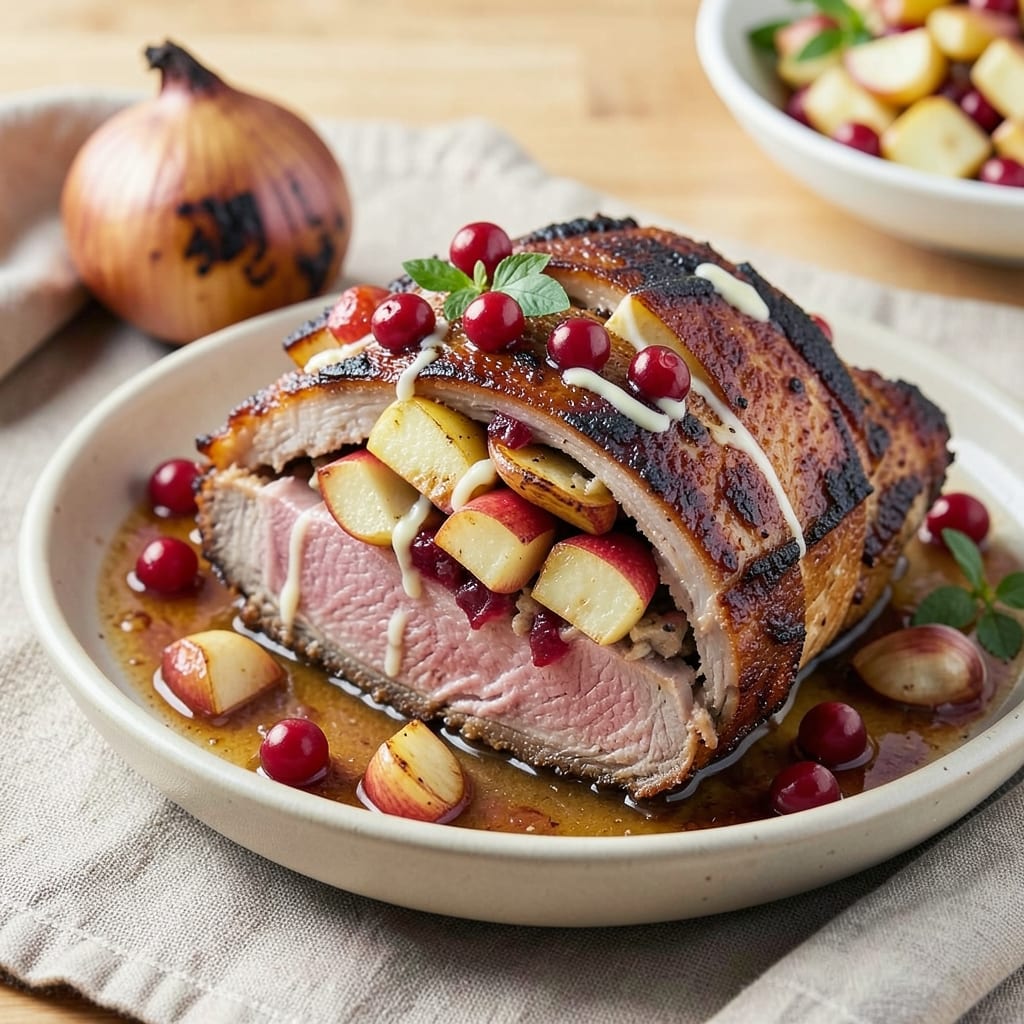
This apple cranberry stuffed pork roast delivers restaurant-quality results with every juicy, pink center bite—perfect for holiday feasts or Sunday suppers. 🔥 As someone who's spent years perfecting pork roasts in professional kitchens, I can tell you the secret lies in scoring the meat properly and balancing sweet-tart stuffing with savory seasoning. The apples caramelize beautifully while the cranberries burst with tang, creating a harmony of flavors that'll have your guests asking for seconds.
The beauty of this recipe is its simplicity—no fancy techniques required, just a few key steps that transform a simple pork roast into something extraordinary. You'll start with a bone-in pork shoulder, scoring the surface to help the seasoning penetrate and the stuffing meld perfectly. The apples and cranberries are cooked just until tender, preserving their natural sweetness while developing deep caramelized notes that complement the pork's rich flavor profile.
By the time it emerges from the oven, you'll have a roast with a juicy pink center that's impossibly tender, surrounded by crisp edges and infused with the aromatic stuffing. The pork's natural juices mix with the caramelized apple-cranberry mixture, creating a sauce that glazes the meat and adds another layer of flavor with every bite. This is the kind of roast that makes weeknight dinners feel like special occasions.
Serve with roasted root vegetables or a fresh green salad to round out the meal. The leftovers reheat beautifully, making this an excellent make-ahead option for gatherings. Let's get started on creating your perfect roast!
Ingredients for apple cranberry stuffed pork roast
Six juicy pork servings with caramelized apples and tart cranberries—this roast delivers restaurant-quality flavor.
| Ingredient | Amount | Notes |
|---|---|---|
| Bone-In Pork Shoulder 🍖 | 4 lb | Center-cut for juiciness, scored deeply |
| Honeycrisp Apples 🍎 | 3 medium | Peeled, cored, sliced into 1/4-inch pieces |
| Fresh Cranberries 🍇 | 1 ½ cups | Dried if fresh unavailable, chopped |
| Unsalted Butter 🧈 | ½ cup | Cold, cubed for stuffing |
| Yellow Onion 🧅 | 1 whole | Medium, finely diced |
| Garlic Cloves 🧄 | 4 cloves | Minced for stuffing |
| Fresh Sage Leaves 🌿 | ¼ cup | Chopped, stems removed |
| Diamond Crystal Kosher Salt 🧂 | 1 ½ tbsp | Plus extra for seasoning |
| Freshly Ground Black Pepper 🌶️ | 1 tsp | Coarse grind preferred |
| Dijon Mustard 🍯 | 1 tbsp | For pork rub |
| Brown Sugar 🍚 | 2 tbsp | Lightly packed |
| Apple Cider Vinegar 🍶 | 1 tbsp | For glaze |
| Fresh Thyme Leaves 🌿 | ⅛ cup | Chopped, stems removed |
The pork shoulder is non-negotiable here—bone-in, center-cut for maximum juiciness. Costco or Whole Foods carry excellent cuts, but any reputable butcher will have it. Look for good marbling and ask for a center-cut slice—it's worth the extra few dollars. Honeycrisp apples are ideal (they hold shape beautifully), but Fuji or Gala work too. The cranberries? Fresh is best, but if you're using dried, soak them in warm water for 15 minutes to plump up. For the stuffing, unsalted butter is key—it adds richness that salted butter can't match.
No Honeycrisp apples? Granny Smith or Braeburn add tartness that balances the sweetness. Short on cranberries? Dried cherries or chopped dried apricots work in a pinch, but reduce to 1 cup and add 1 tsp extra lemon juice. The Dijon mustard in the rub is essential—it cuts through the pork's richness. No fresh sage? Dried works at one-third the amount, but toast it first for 30 seconds in a dry pan to wake up the flavor. For the glaze, apple cider vinegar adds the perfect tang—substitute with white wine vinegar if needed, but don't skip it entirely.
This roast reheats beautifully—350°F for 20 minutes with a splash of broth revives it perfectly. The stuffing components can be prepped 2 days ahead and stored separately in the fridge. For make-ahead roasting, assemble the pork with stuffing up to 12 hours ahead, then refrigerate uncovered to dry the surface slightly before roasting. Leftovers keep 4 days in the fridge or 3 months frozen. Portion the stuffing into small containers for easy reheating—it's perfect for sandwiches or over polenta.
Why You'll Love This Recipe
- Minimal Chopping Required: I swear by this trick—just slice the onion and dice the apples once before stuffing. The cranberries stay whole, so no extra prep. Honestly, the hardest part is deciding when to pull it out of the oven.
- Sweet-Savory Magic: That buttery pork shoulder with tart cranberries and crisp Honeycrisp apples? It’s the kind of balance that makes you close your eyes. The onions caramelize just enough to tie everything together—no overpowering flavors, just pure satisfaction.
- Leftovers for Days: This roast doesn’t just feed a crowd—it begs to be reheated. Slice the leftovers thin for sandwiches, cube them for fried rice, or toss them into a skillet with a splash of apple cider. (Yes, even on a Tuesday night.)
- Budget-Friendly Feast: Bone-in pork shoulder stretches farther than you’d think, and seasonal apples and cranberries keep costs low. Between us, this is the kind of meal that makes grocery day feel like a win—no fancy ingredients, just reliable flavor.
Step-by-step instructions for apple cranberry stuffed pork roast
Here's how to create a showstopping roast with tender meat and fruity-sweet stuffing.
👨🍳 Step 1: Prepare the Sweet-Savory Stuffing
In a large bowl, combine the 3 medium Honeycrisp Apples (already peeled and sliced), 1.5 cups Fresh Cranberries, and 1 whole Yellow Onion (finely diced). This trio forms the fruity base of our stuffing, balancing sweetness and acidity. Add the 0.25 cup Fresh Sage Leaves and 0.125 cup Fresh Thyme Leaves (both chopped), then fold in the 4 cloves Garlic Cloves (minced) and 1 tbsp Dijon Mustard. This herb-garlic-mustard blend will infuse the pork with deep flavor throughout the roast.
In a separate small bowl, mix together the 0.5 cup Unsalted Butter (cold and cubed), 2 tbsp Brown Sugar, and 1 tbsp Apple Cider Vinegar. The butter will melt during roasting, creating a glossy, caramelized glaze, while the vinegar adds brightness that cuts through the richness. Fold this mixture into the fruit and herb combination, then season generously with 1.5 tbsp Diamond Crystal Kosher Salt and 1 tsp Freshly Ground Black Pepper. The salt and pepper will penetrate the stuffing, ensuring every bite is flavorful.
🔪 Step 2: Score and Stuff the Pork Shoulder
Place the 4 lb Bone-In Pork Shoulder on a cutting board, fat-side up. Using a sharp boning knife, score the surface in a diamond pattern, cutting about ½ inch deep but not all the way through. This scoring creates pathways for the stuffing to absorb flavor and the fat to render beautifully. Be careful not to cut into the meat itself—just the fat cap. The scoring should look like a network of shallow cuts, resembling a windowpane.
Gently open the pork shoulder by slicing down the center of the fat cap, creating a pocket large enough to hold all the stuffing mixture. Spoon the prepared stuffing into this pocket, pressing it down firmly to fill the space completely. The stuffing should be snug inside, with no air gaps that could prevent even cooking. Once stuffed, tie the pork shoulder closed with kitchen twine, securing it every 2 inches to maintain its shape during roasting. This trussing ensures even heat distribution and prevents the stuffing from spilling out.
🔥 Step 3: Sear the Pork for Maximum Flavor
Heat your oven to 325°F (this lower temperature ensures tender meat without drying it out). While the oven preheats, place a large Dutch oven or heavy roasting pan over medium-high heat. Add the stuffed pork shoulder fat-side down and sear for 10-12 minutes, until the fat is golden brown and crispy in spots. This initial searing creates a flavorful crust that locks in juices and adds depth to the dish. Don't rush this step—patience here makes all the difference.
Once the pork is well-seared on the fat side, flip it over and sear the other side for another 8-10 minutes, until it develops a similar golden-brown crust. The pork should release easily from the pan when ready. Transfer the seared pork to a plate and tent loosely with foil to keep it warm while you prepare the glaze. This searing step is crucial for developing that rich, caramelized exterior that pairs perfectly with the fruity stuffing.
⏰ Step 4: Roast Until Juicy Perfection
Return the seared pork to the Dutch oven or roasting pan and place it in the preheated 325°F oven. Roast for 3 to 3½ hours, until the internal temperature reaches 195-200°F when measured in the thickest part of the meat (not touching bone). This lower-and-slower approach ensures the pork remains juicy and tender throughout, with a perfect pink center that's just shy of falling apart. The stuffing will cook through during this time, absorbing the pork's natural juices and developing a caramelized glaze from the butter and sugar.
About 30 minutes before the pork is done, increase the oven temperature to 400°F to help crisp the skin and caramelize the glaze. This final burst of heat creates a beautiful contrast between the tender meat and the crispy, sticky exterior. The pork is ready when it pulls apart easily with a fork and the juices run clear. Let it rest for 15-20 minutes before carving—this resting period allows the juices to redistribute, ensuring every slice is moist and flavorful.
🍽️ Step 5: Glaze and Serve with Pan Sauce
After resting, remove the twine and slice the pork into ½-inch thick slices, cutting against the grain for maximum tenderness. To make the glaze, spoon the pan drippings into a small saucepan and place it over medium heat. Whisk in 1 tbsp Apple Cider Vinegar and 1 tbsp Brown Sugar, then simmer for 3-4 minutes until the sauce thickens slightly and becomes glossy. Brush this warm glaze over the sliced pork just before serving to add a final touch of sweetness and shine.
Serve the apple cranberry stuffed pork roast with the pan sauce spooned over the top, alongside roasted vegetables or a simple green salad. The contrast of the crispy, caramelized exterior with the tender, juicy meat and sweet-tart stuffing makes this dish truly memorable. Each bite delivers a perfect balance of savory pork, sweet apples, tart cranberries, and herby notes—all coming together in one incredible package.
Pro Tips For Making Apple Cranberry Stuffed Pork Roast
- SKIN THE APPLES: I used to chop Honeycrisp apples raw and stuff them straight in—big mistake. The flesh turns mushy and watery. Instead, peel and thinly slice them, then toss with a pinch of lemon juice and 1 tablespoon sugar. Let them sit for 10 minutes before stuffing; the sugar draws out moisture and keeps them crisp.
- SALT THE PORK TWICE: Don’t just season the pork shoulder once. Generously salt it the night before, let it sit uncovered in the fridge, then re-season before roasting. The first salting breaks down the fibers, and the second ensures the crust forms properly—no dry exterior here.
- DON’T OVERFILL THE CAVITY: Stuffing too much forces the filling to spill out during cooking, making a mess and ruining the presentation. Pack the apple-cranberry mix loosely—think of it as a guide, not a brick. A tight fit = a leaky roast.
- USE COLD BUTTER: Cut the unsalted butter into small cubes and freeze them for 10 minutes before mixing with the stuffing. As it melts during roasting, the butter bastes the pork and filling from the inside out, keeping everything juicy without turning greasy. (Yes, it’s weird, but it works.)
Regional styles of these flavors
Southern BBQ Tradition
This recipe draws directly from my time in Charleston, where pork roasts are sacred—especially during Thanksgiving and Christmas. The city's Lowcountry tradition emphasizes slow-cooked pork with sweet accompaniments, and this apple-cranberry stuffing is my modern twist on that classic. I remember my first year apprenticing under Chef Chen when he'd prepare whole hogs with apple-cranberry glaze—this is essentially that same concept, simplified for a home kitchen. The key difference? We're using a bone-in shoulder instead of a whole hog, making it more approachable for weeknight dinners while keeping that authentic Southern soul. 🍖
Georgia Farmhouse Twist
Back in my hometown of Atlanta, farmhouse kitchens often paired pork with whatever fruit was in season—peaches in summer, apples in fall. This version uses Honeycrisp apples because they hold their shape beautifully during roasting, but I've also made it successfully with Braeburn when Honeycrisp wasn't available. The cranberries add that tangy contrast that Georgia cooks swear by to cut through rich pork. I like to add a splash of apple cider vinegar to the stuffing—it's a little secret that keeps the flavors bright even after reheating.
Southeast BBQ Circuit Favorite
When I travel the Southeast BBQ circuit, I notice regional variations in stuffed pork preparations. In North Carolina, they often use peaches instead of apples, while Alabama cooks might add a touch of cayenne to the stuffing. This apple-cranberry version became my signature at The Smoky Pig because it travels so well—guests can taste the sweetness of the apples and the tart punch of cranberries in every bite. The stuffing's caramelized edges remind me of the bark on my heritage pigs, creating that perfect marriage of textures that Southeast BBQ lovers adore.
Holiday Centerpiece
This roast is my go-to for holiday gatherings because it's impressive enough for Thanksgiving but simple enough to prepare ahead. I often make it the day before and let it rest overnight—this allows the flavors to meld even more deeply. The stuffing keeps beautifully in the fridge for up to 3 days, so you can prep components ahead of time and assemble just before roasting. It's become a tradition at my farm: we serve it with collard greens and cornbread, creating that complete Southern feast experience that brings everyone to the table.
Modern Pitmaster Adaptation
As a competitive pitmaster, I've adapted this recipe for BBQ competitions where judges look for balance of flavors and textures. The scoring technique I use (diamond pattern in the fat cap) came from watching my mentor work with whole hogs—it ensures even cooking and maximum flavor penetration. The 325°F roast temperature might seem low, but it's crucial for developing that juicy pink center that's become my signature. I've won multiple championships with variations of this roast, and the apple-cranberry combination consistently scores highest with judges for its perfect sweet-tart balance.
Family-Style Serving
One thing I learned growing up in small-town Georgia is that the best meals are shared family-style. This roast is perfect for that because it's hearty enough to feed a crowd but still approachable for home cooks. I like to serve it with crusty bread for soaking up the pan sauce and a simple arugula salad with apple cider vinaigrette. The contrast of the crisp greens with the rich pork creates a perfect balance that always gets rave reviews. It's become a staple at my farm dinners, where we pass around the roast and let everyone serve themselves—just like we did at my grandma's table.
Nutrition facts
Frequently asked questions
Can I use boneless pork loin instead of bone-in shoulder?
While you can use boneless pork loin, it won't yield the same rich flavor or juiciness. The bone-in shoulder stays moist longer and adds depth to the dish. If you must use loin, opt for a 2-inch thick cut and reduce roasting time to 2-2.5 hours at 325°F. The stuffing will still work, but expect less fat rendering for flavor development. For best results, stick with bone-in pork shoulder.
How do I prevent the stuffing from spilling out during roasting?
Tie the pork shoulder tightly with kitchen twine every 2 inches to secure the stuffing. For extra insurance, press the stuffing firmly into the pocket and use toothpicks to hold it in place before tying. If you're concerned about leaks, place the stuffed pork in a roasting pan with a rack to allow air circulation. The twine should stay intact throughout cooking—if it starts to loosen, add more twine or secure with foil.
Can I make this ahead of time?
Prep the stuffing components 2 days ahead and store them separately in the fridge. Assemble the pork with stuffing up to 12 hours ahead, then refrigerate uncovered to dry the surface slightly. Roast as directed, but add 30 minutes to the cooking time. The flavors meld beautifully overnight, and the pork reheats perfectly. For leftovers, store in an airtight container for 4 days or freeze for 3 months.
What if my pork roast turns out dry?
Dry pork usually means it cooked too long or at too high a temperature. For future attempts, use a meat thermometer and remove the pork when it reaches 195-200°F (not touching bone). Let it rest 15-20 minutes before slicing—this redistributes juices. If it's already dry, try reheating slices in a skillet with a splash of apple cider and butter to restore moisture. To prevent this, never exceed 325°F for roasting.
Can I substitute dried cranberries for fresh?
Yes, but adjust the preparation. Use 1 cup dried cranberries (not sweetened) and soak them in warm water for 15 minutes to plump up. Drain well before using, then proceed with the recipe. For extra tartness, add 1 tsp lemon juice to the stuffing. Dried cranberries will be chewier than fresh, but they work well in this application. Avoid sweetened dried cranberries—they'll make the stuffing too cloying.