
Side Dishes
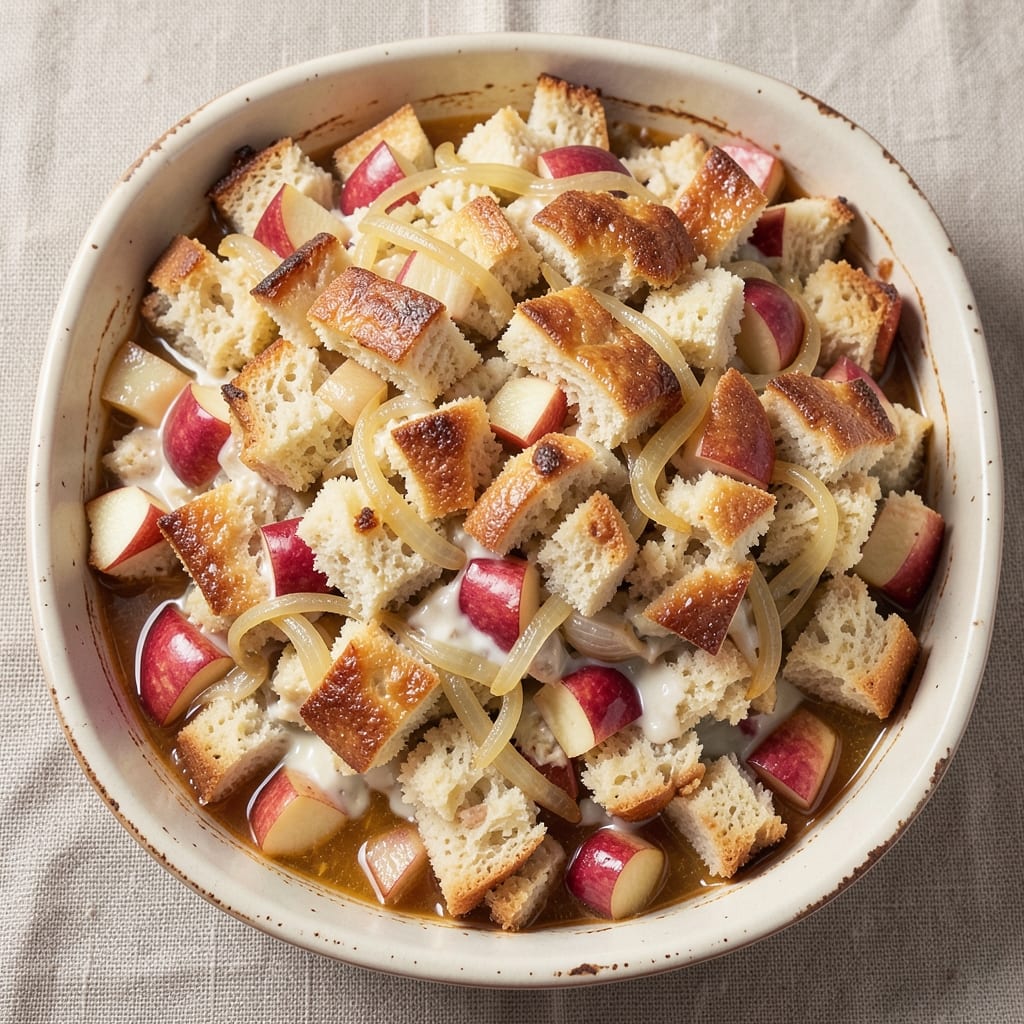
This apple bread stuffing recipe transforms holiday leftovers into a spiced, golden masterpiece that balances sweet apple chunks with savory herbs and crispy bread. The secret lies in perfectly caramelized apples and onions that infuse the bread cubes with aromatic depth, creating a texture that's both tender and satisfying. Unlike traditional dry stuffing, this version stays moist thanks to a rich broth base and a touch of apple cider that enhances every bite.
What sets this recipe apart is the juicy contrast between tender bread and plump apple pieces—each forkful delivers a harmony of flavors that makes it a crowd-pleaser for Thanksgiving or any festive gathering. The process is straightforward: cube your bread, sauté the apples and onions until tender, then mix everything with herbs, broth, and a hint of cinnamon for warmth. A final bake until golden ensures that crispy edges complement the soft interior.
For modern twists, consider using gluten-free bread or substituting maple syrup for traditional sugar, while classic versions benefit from a sprinkle of toasted pecans or fresh sage before serving. The aroma alone—warm spices mingling with caramelized apples—will have everyone anticipating the first bite. Ready to elevate your holiday table with this foolproof, flavor-packed dish?
Perfect as a side for roasted turkey or ham, this stuffing also shines as a standalone dish when served with gravy. The recipe scales easily for large gatherings, ensuring no one leaves leftovers behind. Let's create a stuffing that becomes the star of your meal.
Ingredients for apple bread stuffing
Juicy apples and aromatic herbs meet crispy bread cubes for a stuffing that steals the show.
| Ingredient | Amount | Notes |
|---|---|---|
| Stale Bread Cubes 🍞 | 8 cups | Day-old French or sourdough preferred |
| Apples 🍎 | 2 ½ lb | Honeycrisp or Fuji, peeled and diced |
| Yellow Onion 🧅 | 1 whole | Medium size, thinly sliced |
| Unsalted Butter 🧈 | ½ cup | Cold, cubed for sautéing |
| Chicken Broth 💧 | 2 cups | Low-sodium, homemade or store-bought |
| Apple Cider 🍏 | ½ cup | Unsweetened, for moisture |
| Fresh Sage Leaves 🌿 | ½ cup | Chopped, stems removed |
| Fresh Thyme Leaves 🌿 | 1 tbsp | Chopped, stems removed |
| Ground Cinnamon 🌶️ | 1 tsp | Freshly ground preferred |
| Salt 🧂 | 1 ½ tsp | Kosher or sea salt |
| Black Pepper 🌶️ | ½ tsp | Freshly ground preferred |
| Granulated Sugar 🍚 | 1 tbsp | Adjust to taste |
The apples are non-negotiable here—Honeycrisp or Fuji deliver that perfect balance of sweetness and crunch. Trader Joe's or local orchards usually carry them fresh, but any crisp apple works in a pinch. For the bread, stale is ideal—French or sourdough cubes hold up best, but gluten-free options work too. Cube your own for even toasting, or buy pre-cubed at Whole Foods if you're short on time. The onions should be medium-sized and yellow—they caramelize beautifully and add depth without overpowering the sweetness.
No fresh sage? Dried works at half the amount, but the flavor won't be the same. Out of apple cider? Substitute with extra broth or apple juice, though the texture will be slightly less moist. For the butter, European-style or grass-fed adds richer flavor, but regular unsalted butter is fine. The cinnamon is key—Ceylon cinnamon has a more delicate taste, while regular cassia works for classic spice. Want extra crunch? Toss in toasted pecans or walnuts before baking—just 1/4 cup makes a difference.
This stuffing reheats beautifully—4-5 days in the fridge or 3 months frozen in an airtight container. For freezing, portion before baking to reheat individual servings. The bread cubes crisp up again when reheated, so a quick broil for 2-3 minutes brings back that golden crunch. Make ahead? Assemble the mixture, cover, and refrigerate overnight for even deeper flavors. Leftovers? Toss with gravy for a comforting sandwich.
Why You'll Love This Recipe
- Here’s what sold me: the next-day texture. The apples get even more tender, the bread stays crispy at the edges, and it reheats in minutes. I’ve turned it into a sandwich filling, a breakfast hash, or just eaten it straight from the fridge—no judgment. Budget-friendly? Absolutely. But mostly, it’s just reliable.
- No-Waste Magic: I swear by this trick—stale bread that would’ve gone straight to the bin? Transformed into something golden and fragrant. The cubes soak up the broth like a sponge, but the apples keep it from turning soggy, so you’re not left with a sad, mushy mess.
- Sweet-Savory Crunch: That caramelized apple and onion combo? It’s like a hug for your taste buds—warm cinnamon notes from the apples, sharp bite from the onions, all wrapped in buttery bread. Honestly, it’s the kind of flavor that makes you want to eat stuffing for breakfast.
- Holiday or Weeknight: Between us, this works for Thanksgiving and Tuesday dinners. Serve it alongside roasted chicken for a cozy meal, or pack it in jars for a last-minute potluck. My college-aged son even asked for it when I sent him to campus—rare for stuffing to pass the "cool factor" test.
Step-by-step instructions for apple bread stuffing
Here's how to create a moist, flavorful stuffing with perfect texture and juicy apple chunks.
Sauté Onion and Apples Until Soft
In a large skillet, melt the 0.5 cup unsalted butter over medium heat. Add the 1 whole yellow onion and cook for 5 minutes until translucent. This is your foundation—don't rush it, or the onions will burn before softening properly.
Add the 2.5 lb apples (peeled and diced) to the skillet. Sprinkle with 1 tbsp granulated sugar and cook for another 8-10 minutes until the apples release their juices and begin to soften. You're looking for tender apples that still hold their shape—overcooking will make them mushy. Stir occasionally to prevent sticking, and if the mixture looks dry, add 1-2 tablespoons of apple cider to maintain moisture.
Toast the Bread Cubes with Herbs and Spices
In a separate large bowl, combine the 8 cups stale bread cubes with the 0.5 cup fresh sage leaves, 1 tbsp fresh thyme leaves, 1 tsp ground cinnamon, 1.5 tsp salt, and 0.5 tsp black pepper. Toss gently to distribute the herbs and spices evenly throughout the bread. This step ensures every bite gets that aromatic punch.
Transfer the bread mixture to a large oven-safe skillet or baking dish. Spread it out in an even layer and toast in a preheated 350°F oven for 10 minutes, stirring once halfway through. The bread should turn light golden brown and crisp slightly at the edges. This toasting step is crucial—it removes excess moisture and creates that satisfying crunch while keeping the interior tender.
Combine and Simmer with Broth and Cider
Remove the toasted bread from the oven and return it to the bowl. Add the sautéed onion and apple mixture, along with the 2 cups chicken broth and 0.5 cup apple cider. Stir everything together until the bread is evenly moistened but not soggy. The mixture should look like a thick, chunky stew with visible bread pieces.
Transfer the stuffing to the same oven-safe skillet or baking dish you used for toasting. Cover tightly with aluminum foil and bake in the 350°F oven for 20 minutes. This initial baking allows the flavors to meld and the stuffing to firm up slightly. After 20 minutes, uncover and bake for another 10-15 minutes until the top is golden brown and the edges are crispy. The internal temperature should reach 165°F—this ensures the stuffing is fully heated through and safe to eat.
Rest and Serve for Maximum Juiciness
Remove the stuffing from the oven and let it rest for 10 minutes before serving. This resting period is essential—it allows the juices to redistribute throughout the stuffing, preventing them from pooling at the bottom. If the stuffing looks dry after resting, sprinkle with a little more chicken broth or apple cider and let it sit for another 5 minutes uncovered.
Serve immediately while warm. The stuffing should have a crispy exterior with a soft, moist interior, and those juicy apple chunks should be visible in every bite. The aroma of sage and thyme should be rich and inviting, with just a hint of cinnamon warmth. Pair it with roasted chicken or turkey for a holiday-worthy centerpiece that delivers both comfort and flavor.
Pro Tips For Making Apple Bread Stuffing
- Dry the bread cubes first: Toss those stale cubes in a single layer on a baking sheet and let them sit for at least 30 minutes—no, don’t skip this. Wet bread turns to mush, and you’ll end up with a sad, gluey mess instead of something that holds its shape. I used to rush this step, and my stuffing always fell apart when I tried to serve it.
- Sauté onions low and slow: Onions should caramelize, not burn—keep the heat at medium and let them cook for 10-12 minutes until soft and golden. I learned this the hard way after my first batch tasted bitter and overpowering. A splash of broth at the end helps deglaze those stuck-on bits too.
- Use firm apples, peel on: Honeycrisp or Granny Smiths hold up better than mushy varieties like Fuji when baked. Peel them first—it cuts down on bitterness and keeps the texture clean. I was skeptical until I tried it, and now I won’t go back.
- Toast the bread cubes twice: First in the oven (350°F for 10 minutes) to dry them out, then again after mixing with broth to crisp the edges. This isn’t the prettiest method, but it’s the tastiest—your stuffing will stay moist inside but develop a golden, buttery crust. Trust the process.
Storing and reheating this apple bread stuffing
Refrigerator Storage
Store your apple bread stuffing in an airtight container with a lid for up to 4-5 days in the refrigerator. I use glass Pyrex containers with snap-on lids—they keep flavors fresh and prevent drying. The stuffing actually tastes better the next day as the spices meld together. Just
Freezer Prep Tips
For long-term storage, portion the stuffing into quart-sized freezer bags or airtight containers before freezing. Leave 1 inch of headspace to account for expansion. I like to freeze it in individual servings so I can reheat just what I need. Label with the date—this stuffing stays delicious for up to 3 months in the freezer. 🧊
Stovetop Reheating
My favorite method for reheating is on the stovetop. Transfer the stuffing to a large skillet and add 2-3 tablespoons of chicken broth or apple cider to restore moisture. Cover with a lid and heat over medium-low heat for 10-12 minutes, stirring occasionally. This gentle approach keeps the bread from drying out. 🔥
Microwave Method
For a quick option, microwave individual portions covered with a damp paper towel on 70% power for 2-3 minutes. Stir halfway through, then continue in 30-second intervals until heated through. Add a splash of broth or cider if it looks dry—this prevents a rubbery texture. 💡
Oven Crisp Refresh
If you want to restore that crispy exterior, transfer the stuffing to a baking dish and broil for 2-3 minutes at the end. Keep a close eye on it to prevent burning. This works especially well for leftovers that have lost their crunch. The result? A restaurant-quality texture that feels fresh out of the oven. ✨
Make-Ahead Assembly
Assemble the stuffing a day ahead and refrigerate uncovered. This lets excess moisture evaporate, creating a lighter texture when baked. Just cover and refrigerate overnight, then bake straight from the fridge (add 5-10 minutes to the baking time). The flavors deepen overnight, making it even more delicious. 🍂
Nutrition facts
Frequently asked questions about apple bread stuffing
Can I use fresh bread instead of stale bread cubes?
Fresh bread works, but it won't have the same crispy texture. For best results, use day-old bread that's been dried out slightly. If you must use fresh bread, cube it and spread the pieces on a baking sheet to dry in a 200°F oven for 10-15 minutes before toasting with the herbs. This prevents a soggy stuffing.
What's the best way to keep my stuffing moist?
Moisture is key! Start by not over-toasting the bread cubes—just until golden. Add apple cider or extra broth if the mixture looks dry during baking. Cover tightly with foil for the first 20 minutes of baking to trap steam. Finally, let it rest 10 minutes after baking so juices redistribute.
Can I make this stuffing without apples?
Swap the apples for sautéed mushrooms or diced celery and pear for a similar texture. For a savory version, use onions and carrots with a pinch of nutmeg instead. The apple cider can be replaced with extra broth or white wine for moisture.
How do I make this stuffing gluten-free?
Use gluten-free bread cubes (like cornbread or rice bread) and ensure all ingredients are certified gluten-free. Check broth labels for hidden gluten, and use gluten-free oats if adding any. The recipe works perfectly with these substitutions while maintaining the same moist, flavorful texture.
Why did my stuffing turn out dry?
Dry stuffing usually means one of three things: over-toasted bread, insufficient liquid, or under-baking. Start with 8 cups of bread cubes and add 2.5 cups of liquid total (broth + cider). If it still looks dry after baking, sprinkle with 2 tablespoons of broth or cider before serving. Covering with foil during baking helps too!