
Sauces & Condiments
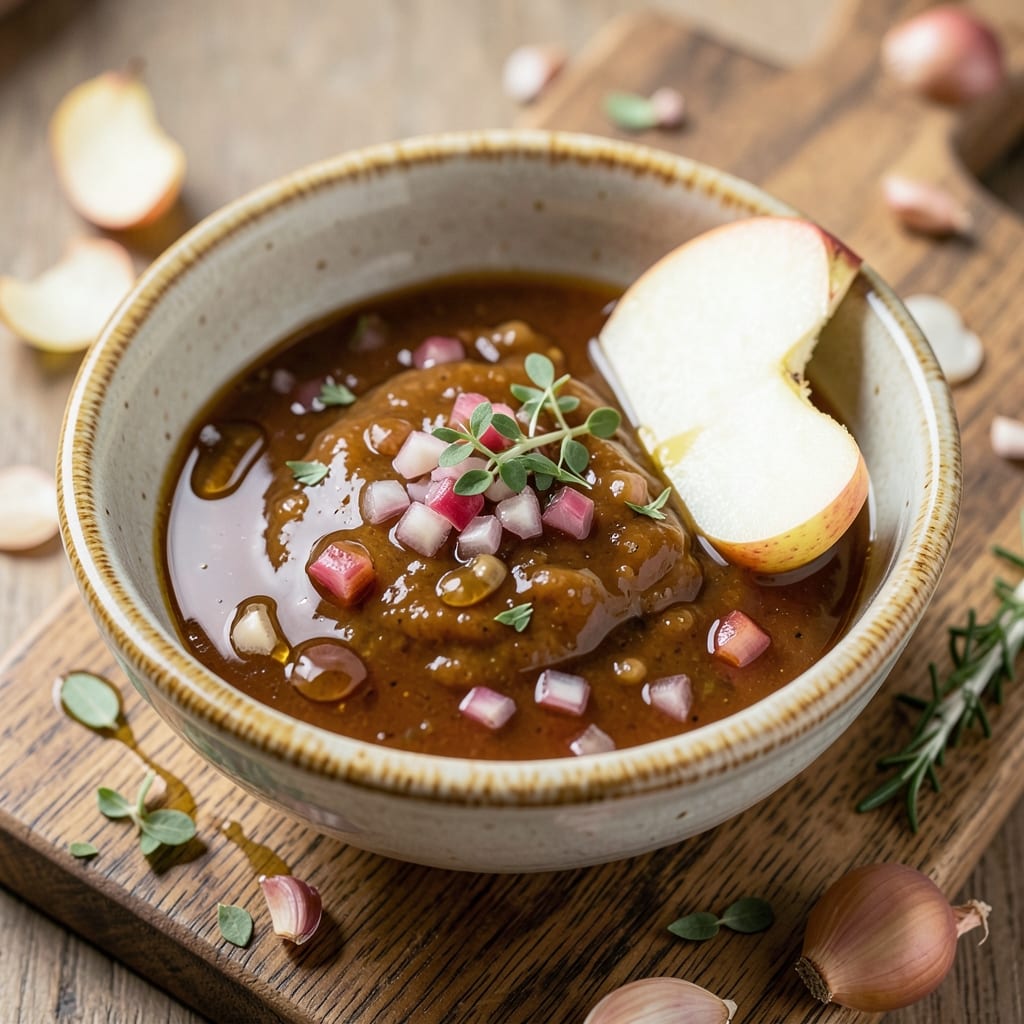
This apple cider vinaigrette recipe transforms ordinary salads into autumnal masterpieces with its perfect tangy-sweet balance. 🍎 I developed it during harvest season after realizing how much better fall flavors taste when paired with this bright, aromatic dressing—it’s the secret weapon behind my favorite seasonal dishes.
The magic lies in the combination of apple cider, Dijon mustard, and honey, creating a dressing that’s rich enough to coat greens but light enough to let other flavors shine. Unlike store-bought versions, this recipe uses real apple cider for depth and a touch of fresh thyme for herbal brightness—simple ingredients that deliver restaurant-quality results.
What you’ll end up with is a velvety dressing that clings beautifully to mixed greens, roasted vegetables, or even grilled chicken. The apple cider adds subtle sweetness while the vinegar keeps it bright and tangy, making every bite feel like a taste of fall. It’s versatile enough for any salad but special enough for holiday tables.
Store it in the fridge for up to a week, or make a double batch to use throughout the season. Here’s how to create this foolproof dressing that’ll elevate your meals from ordinary to extraordinary.
Ingredients for apple cider vinaigrette recipe with apple cider
Eight simple ingredients for a dressing that tastes like autumn in every bite.
| Ingredient | Amount | Notes |
|---|---|---|
| Apple Cider 🍎 | ½ cup | Unfiltered for best flavor |
| Extra-Virgin Olive Oil 🫒 | ½ cup | High quality, fruity |
| Apple Cider Vinegar 🍶 | ¼ cup | Raw and organic preferred |
| Dijon Mustard 🌶️ | 1 tbsp | Mild or strong variety |
| Honey 🍯 | 1 tbsp | Local if possible |
| Shallot 🧅 | 1 whole | Minced, small preferred |
| Fresh Thyme Leaves 🌿 | 1 tbsp | Chopped, stems removed |
| Salt 🧂 | ½ tsp | Kosher or sea salt |
| Black Pepper 🌶️ | ¼ tsp | Freshly ground preferred |
| Garlic Clove 🧄 | 1 whole | Minced, one clove |
Apple cider is the star here—Mott's or Woodchuck are my go-tos, but any unfiltered brand works. The shallot adds subtle sweetness (no need to peel it—just rinse and mince), and fresh thyme is ideal but dried works at one-third the amount. For the mustard, Amoy or Maille are premium picks, but the grocery store stuff is fine. The honey should be local if you can find it—Trader Joe's often has great options. If you're missing thyme, tarragon or marjoram work beautifully too.
No apple cider vinegar? White wine vinegar or balsamic in a pinch (start with half the amount and adjust to taste). Swap honey for maple syrup or agave—just remember it's sweeter, so use half. The garlic can be skipped if you're not a fan, but trust me, it rounds out the flavors. For a smoother texture, blend the shallot and garlic first—no one will know. And if you're making this ahead, add the honey last—it keeps the dressing brighter longer.
This dressing keeps for up to 1 week in the fridge, but the flavors actually improve after a day or two. Store it in a glass jar with a tight lid—it's less likely to absorb fridge odors. I like to make a double batch and keep it in the fridge for quick salad tosses all season. If it thickens, just whisk in a splash of water or more apple cider. It's perfect for roasted veggies, grilled chicken, or even drizzled over apples.
Why You'll Love This Recipe
- Five-Ingredient Magic: I swear by this combo—just shake, taste, adjust. No fancy techniques, no peeling apples (yes, we’re using the cider straight from the jug), and the Dijon mustard does all the emulsifying work for you.
- Fall in Your Salad: That honey-apple-cider balance? It’s like autumn in a bottle. Sweet enough to tame greens but sharp enough to cut through crispy roasted veggies or even grilled chicken—no one will guess it’s this simple.
- Weekend to Weeknight: Make a big batch on Sunday and drizzle it over everything: grain bowls, charcuterie, even deviled eggs. The apple cider vinegar keeps it fresh for days, and honestly? I’ve had this last me a full week in the fridge without turning weird.
- Pocketbook-Friendly Luxury: Extra-virgin olive oil gets the fancy treatment here, but the rest? Pantry staples. A splash of cider, a spoon of honey—you’re basically making gourmet dressing for the price of a coffee run. (Between us, this is how I justify my $6 lattes.)
Step-by-step instructions for apple cider vinaigrette
Here's how to blend this bright, tangy-sweet dressing that elevates any salad.
👨🍳 Step 1: Prep the Aromatics
Start by mincing the 1 whole shallot and 1 whole garlic clove into a fine texture—think tiny dice, not coarse chunks. This ensures they dissolve smoothly into the dressing rather than creating texture. I like to use the flat side of my chef's knife to gently crush the garlic first, then finely chop both ingredients together.
Add these to a small mixing bowl along with the 1 tbsp chopped fresh thyme leaves. The thyme adds an earthy depth that pairs beautifully with the apple cider's sweetness. Give everything a quick stir to distribute the thyme evenly—this prevents clumping when we add the liquids later.
🍳 Step 2: Whisk the Wet Ingredients
In a separate measuring cup, combine the 0.5 cup apple cider, 0.25 cup apple cider vinegar, and 1 tbsp honey. Give this mixture a quick whisk to help the honey dissolve into the liquids. The apple cider vinegar will start to mellow slightly as it mixes with the sweeter elements, creating that perfect tangy-sweet balance we're after.
Now add the 1 tbsp Dijon mustard to the wet ingredients. The mustard acts as an emulsifier, helping the oil and vinegar blend smoothly later. Whisk vigorously for about 30 seconds until the mustard is completely incorporated—you should see a slight thickening of the mixture as it begins to come together.
🥘 Step 3: Gradually Incorporate the Oil
With your whisk still in hand, slowly drizzle in the 0.5 cup extra-virgin olive oil while continuing to whisk. This gradual approach is crucial—adding oil too quickly creates a broken dressing. Start with just a few drops, whisking constantly until those first drops are fully emulsified before adding more.
Once you've added about half the oil, you'll notice the mixture begin to thicken noticeably. This is when the dressing starts to come together properly. If you're using a high-quality olive oil with good fruity notes, you'll be able to smell that rich aroma mingling with the apple cider's sweetness—this is your reward for using quality ingredients.
🔪 Step 4: Season and Emulsify
Add the prepped shallot, garlic, and thyme mixture to the wet ingredients along with the 0.5 tsp salt and 0.25 tsp black pepper. Give everything a final whisk to combine. The salt will help draw out flavors from all the ingredients, while the pepper adds a subtle warmth that balances the sweetness.
Whisk vigorously for another 1-2 minutes until the dressing reaches your desired consistency. It should coat the back of a spoon but still flow easily. If it's too thick, add 1-2 teaspoons of water at a time until it reaches the perfect drizzling consistency. The dressing should be glossy and uniform, with no visible separation between oil and vinegar.
⏰ Step 5: Rest and Adjust
Let the vinaigrette rest for 5-10 minutes before using. This resting period allows all the flavors to meld together beautifully. During this time, give it one final taste and adjust the seasoning if needed—perhaps a touch more salt to enhance the flavors or a drizzle of honey to sweeten it up.
The dressing should have a bright, tangy sweetness with underlying notes of garlic, thyme, and shallot. It should be smooth with no graininess from the shallot or garlic. If you're using this for a salad, you'll want to dress it just before serving to prevent the greens from getting soggy, but if you're using it as a marinade, you can make it up to 24 hours ahead of time.
Pro Tips For Making Apple Cider Vinaigrette Recipe With Apple Cider
- STIR IT WELL: Mix the apple cider vinegar and Dijon mustard first—don’t just dump everything in at once. The mustard needs to fully emulsify with the vinegar before you add the oil, or you’ll end up with a separated, greasy mess. I learned this after making a salad dressing that looked like a science experiment gone wrong.
- USE WARM CIDER: Take your apple cider out of the fridge 10 minutes before measuring—cold liquids make emulsification harder. Warm cider blends smoother with the oil and vinegar, giving you that silky texture right away. Trust me, your dressing will thank you.
- MEASURE THE HONEY LAST: Add honey to the bowl after whisking the other ingredients. If you mix it in early, the sugar can crystallize and turn your dressing into a grainy nightmare. Stir it in slowly while tasting—you want just enough sweetness to balance the tang, not a syrup bomb.
- SWAP FOR BALANCE: If your apple cider vinegar is too sharp, cut it with a splash of the apple cider itself (about 1 tablespoon per 2 tablespoons vinegar). It mellows the acidity while keeping the apple flavor intact—no need for extra vinegar or honey to "fix" it later. I do this all the time with store-bought vinegar that tastes like it was fermented in a factory.
Essential equipment for this dish
Whisk Essentials
You don’t need fancy tools for this vinaigrette, but a few basics make all the difference. My go-to is a stainless steel whisk with a long handle—I love the OXO Good Grips because it’s lightweight but sturdy, and the angled wires help create emulsions faster. For small batches, a mini whisk (like the Norpro 3-inch) works perfectly in a mason jar, especially when making dressing on the go. 🍎
Measuring Precision
Accurate measurements are key for balance in this dressing. I swear by glass liquid measuring cups with pour spouts—they’re less likely to crack and make pouring apple cider and vinegar easier. For dry ingredients like salt and pepper, a small measuring spoon set (like Weston or KitchenAid) keeps things consistent. Pro tip: Use a small bowl to catch drips when measuring oil to avoid waste.
Storage Containers
Once made, store your vinaigrette in an airtight glass jar—I prefer Le Parfait or Ball mason jars because they’re non-reactive and stackable. The glass preserves flavors better than plastic, and the tight seal keeps fridge odors out. For serving, a small ceramic cruet (like Corelle) adds a pretty touch to your table while keeping the dressing fresh for up to 5 days in the fridge.
Optional Tools
If you’re feeling fancy, a small food processor or blender (like a MiniChopper) can help emulsify the dressing faster, especially if you’re making a big batch. For a smoother texture, pulse the shallot and garlic first before whisking everything together. I also keep a fine-mesh strainer handy to remove any unwanted thyme stems or garlic bits if you prefer a completely smooth dressing. 💫
Knife Skills
Sharp knives are non-negotiable for mincing shallots and garlic. My Victorinox 8-inch chef’s knife is my workhorse, but a Japanese Gyuto (like Shun) gives me that perfect paper-thin slice. For garlic, I use the flat side of my knife to gently crush the clove first—this makes mincing easier and releases more flavor. A small cutting board (like Teakhaus) keeps ingredients contained while you prep.
Nutrition facts
Frequently asked questions
Can I make this vinaigrette without apple cider vinegar?
Yes! If you're missing apple cider vinegar, substitute with white wine vinegar or balsamic vinegar. For the best flavor, use half the amount (about 2 tablespoons) and adjust to taste. The apple cider's natural sweetness will be slightly different, but the tangy balance will still work beautifully.
How do I adjust the sweetness or tanginess?
Start with the recipe as written, then taste and adjust. For more sweetness, add ½ teaspoon more honey at a time. For extra tang, increase the apple cider vinegar by 1 teaspoon. Remember, flavors meld better after resting for 10 minutes, so adjust after that. The key is balance—aim for a bright, tangy-sweet flavor that complements your dish.
Can I use this dressing on non-salad dishes?
This vinaigrette works wonderfully as a marinade for grilled chicken, pork tenderloin, or roasted vegetables. It also makes an excellent drizzle for crusty bread, cheese boards, or even as a finishing sauce for pasta dishes. Just make it 24 hours ahead if using as a marinade for deeper flavor infusion.
Why did my dressing separate?
Separation usually happens when oil and vinegar aren't properly emulsified. Whisk vigorously for 2-3 minutes to recombine. If it's too thick, add 1 teaspoon of water at a time. For future batches, whisk in small increments of oil or use a mini food processor to blend everything smoothly. The mustard helps emulsify, so ensure it's fully incorporated.
What’s the best way to store leftover dressing?
Transfer to an airtight glass jar and refrigerate for up to 1 week. The flavors actually improve over time! If it thickens, whisk in 1 teaspoon of water or apple cider to restore consistency. For serving, use a small ceramic cruet to keep it fresh and prevent contamination.